
MNI Member Resources
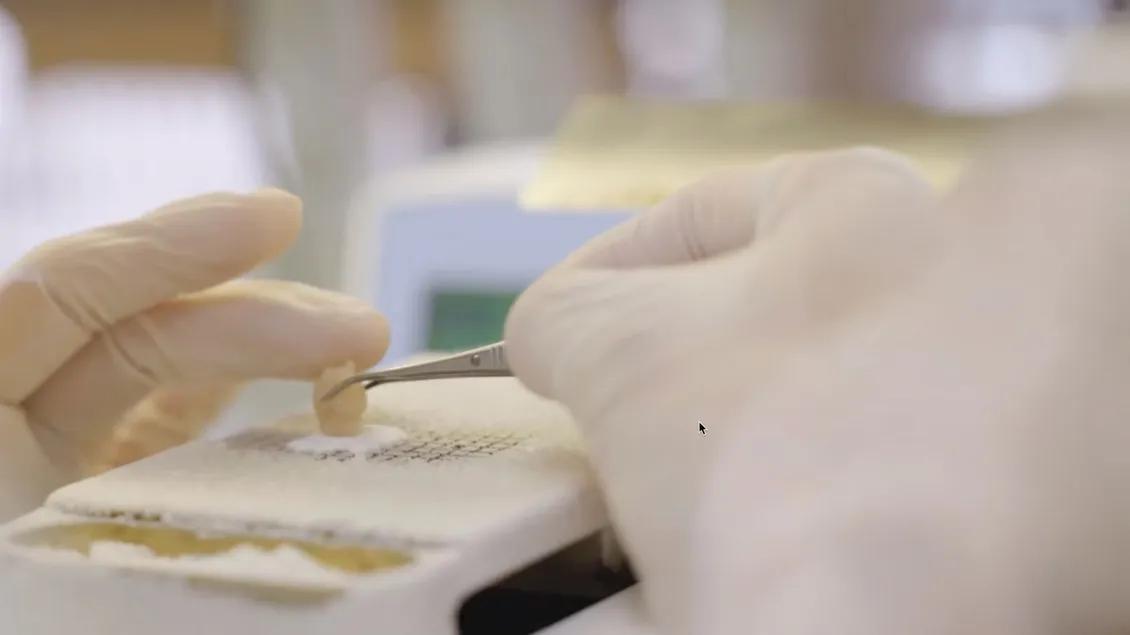
Neuroscience investigators are encouraged to share resources across campus facilitated through the MNI Shared Resource Database.
University of Michigan Investigators may encounter roadblocks when trying to access the resources needed to perform their research. They may also have resources within their lab that could help other researchers with their work. Instead of searching externally for equipment, animal models, key reagents, and even expertise, neuroscience investigators are encouraged to share these things across campus facilitated through the MNI Shared Resource Database.
To add your lab’s shareable resources to the database and improve its value to the neuroscience community, please download and complete this excel document and send it to Lucas Huffman ([email protected]). We encourage you to visit the Database, not only to see its value to others but to help you find the resources you need. Please contact Lucas Huffman with questions or feedback.
The Michigan Neuroscience Institute (MNI) actively fosters networking and collaboration by bringing together neuroscientists, engineers, data scientists and clinical researchers from across departments, schools and campuses to share ideas, build joint projects and accelerate discovery.
By hosting seminars, events and informal gatherings, it creates spaces where otherwise siloed experts can connect, co-create and leverage each other’s resources—for instance, connecting computational teams with clinical labs or engineering groups with behavioral neuroscience. Through this networked model, MNI seeks to seed interdisciplinary research that might not arise organically in a single department, ultimately aiming to translate basic neuroscience into impact on human health.
The Challenge Grant program at MNI supports bold, interdisciplinary neuroscience research by offering seed funding to catalyze collaborations across disciplines. These grants are designed to enable investigators to explore novel ideas, generate preliminary data, and develop the partnerships needed to compete for larger extramural funding. Through this mechanism, MNI aims to foster high-impact discoveries in brain function, neurological and psychiatric disease, and translational neuroscience, by breaking down traditional silos and accelerating team science.
Recruitment
MNI faculty and affiliate members seeking neuroscience postdocs for their lab may apply for MNI-sponsored recruitment incentives. MNI members may apply for up to two postdoctoral advancement scholar appointments in a calendar year. Successful Postdoc candidates must meet the following criteria:
- The position at UM must be the candidate’s first postdoctoral appointment.
- The candidate must be within 2 years of completing their Ph.D.
- The position must be in the lab of an MNI faculty member or an MNI affiliate member.
- Current University of Michigan Ph.D. students are eligible, provided they are not staying in the lab of a previous Ph.D. mentor.
Neuroscience fellows selected by MNI as postdoctoral advancement scholars will receive a signing bonus and the opportunity to compete for and receive internal research funds and will also become part of a peer cohort of trainees at a similar career stage. Faculty actively recruiting postdoctoral fellows should complete and submit this application prior to extending an offer.
2025 MNI Research News & Funding Opportunities Archive
Learn about and attend neuroscience events across the University.
Neuroscience researchers at the University of Michigan may struggle to find the resources they need, while others may have equipment, models, reagents, or expertise to share. The MNI Shared Resource Database connects investigators across campus, making it easier to share and access valuable resources within the U-M neuroscience community.
Please contact Traci Grenier at [email protected] with any questions or feedback.
Resource Database Help
On January 12, 2023, Dr. Lucas Huffman provided information and answered questions on the new MNI Resource Database. For those unable to attend, the presentation slides and full video are available below.
