
CHHASSEM Education
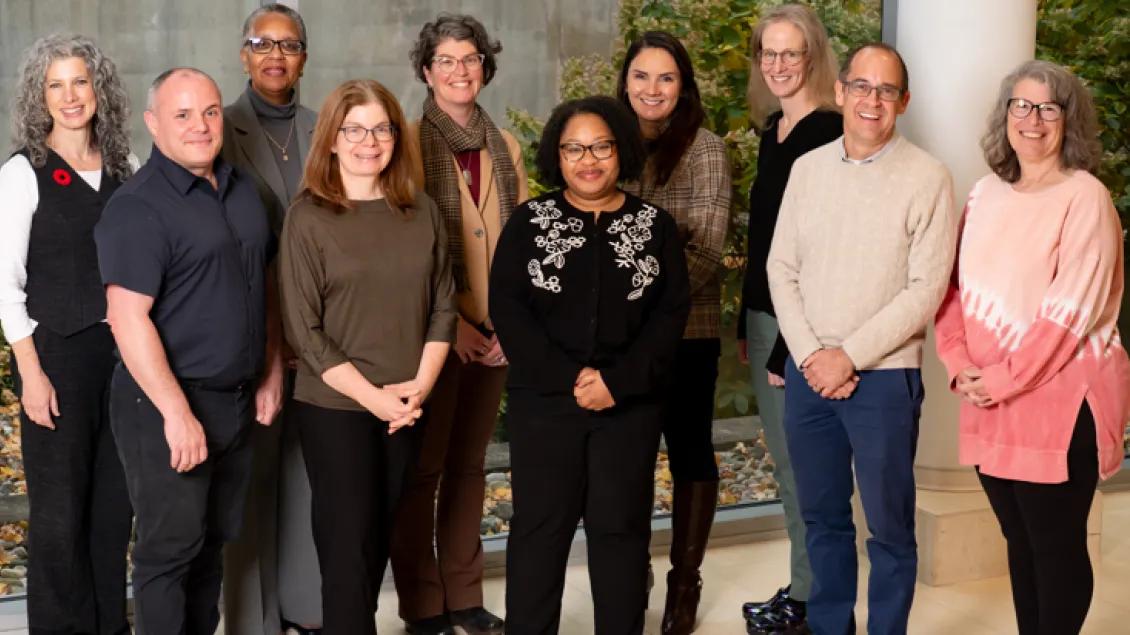
Nurturing Future Interdisciplinary Scholars
CHHASSEM education includes the Medical School’s Program on Health, Spirituality, and Religion (HSR), the Medical Arts Program (MAP), Paths of Excellence in Ethics and Medical Humanities, and the Michigan Bioethics ethics education service and research education initiatives (see details below).
Michigan Bioethics Education Service
Our ethics education service provides classroom and bedside instruction in theoretical and applied clinical and research ethics to students, trainees, and interprofessional health care team members. In addition, Michigan Bioethics sponsors a variety of research education initiatives designed to support junior researchers (both clinicians and non-clinicians) interested in pursuing interdisciplinary, empirical research on (a) understanding and improving the health care communication and decisions made by both patients and providers and/or (b) a wide range bioethics and clinical ethics topics.
An important mission of the ethics service is to extend the ethics education medical students receive at the University of Michigan. Our current curriculum efforts are focused on enriching the existing curriculum and on making instruction on medical ethics for undergraduate medical students at UM more systematic and focused. Our goal is to increase medical student interest in ethics and their competence in recognizing and resolving ethical issues. Our strategy is to weave ethics into the curriculum throughout the 4 years of training in a way that allows students to build upon what they know of ethical theory and to apply that knowledge to their clinical practice. Additionally, given our faculty expertise, our aim is to create novel ethics curriculum components that incorporate our empirical work in bioethics and our particular expertise in decision science.
Our ethics faculty members support medical school ethics core curriculum in multiple seminars/clinical rotations and provide course content in the area of research ethics in the M1 year. Some of the ethics faculty also serve as doctoring faculty and this course covers content related to ethics in the M1 year. Students also work with ethics instructors in the second year on a course that changes yearly (Health Systems Science course) but has included book clubs on ethics and a course this year on narrative medicine. In the clerkships, students participate in required ethics sessions for emergency medicine and OB/GYN rotations that are taught by Michigan Bioethics faculty members.
Research Education
A key part of our culture is its culture of encouraging interdisciplinary research collaborations and of mentoring junior researchers in research projects large or small. In particular, Research Ethics supports collaborations between clinician scientists who are experts in their clinical specialty and social scientists who are experts in the full range of empirical social science methodologies that are relevant to studying medical and ethical decision making. Our Bioethics Grand Rounds, Seminar Series, and annual Research Colloquium are all designed to create opportunities for such cross-disciplinary research. Our weekly Working Group meetings enable researchers to get constructive feedback on in-progress research from a wide range of disciplinary perspectives. Our faculty and staff are well known for helping researchers follow best practices in survey design and implementation.
Predoctoral Clinical Ethics Fellowship
The Clinical Ethics Service has successfully developed a first-in-kind predoctoral clinical ethics fellowship for medical students, providing hands-on training and exposure to the next generation of ethicists. Students serve six months full-time on the clinical service and participate in proactive ethics rounds, ethics consultation, as well as research and education.
Responsibilities include but are not limited to performing consult intakes, interviewing relevant parties, EMR documentation, presenting cases to the adult and pediatric hospital ethics committees, participating in proactive ethics rounds, and serving as a teaching assistant for the online ethics course and rotating learners. Students will work closely with the clinical and faculty ethicists who rotate through the service. Travel and funding opportunities for research conducted during the fellowship may be provided.
Fellows who successfully complete the program will meet national standards for ethics consultants and will be prepared to take the ASBH Healthcare Ethics Consulting Certification (HEC-C) exam (Feder J Clin Ethics 2021).
Time spent with the Clinical Ethics Service is concurrent with the medical school curriculum and does not require a leave of absence. Applicants must currently be enrolled and in good standing at the University of Michigan Medical School and have completed core clinical clerkships. Students must maintain their status as a medical student (M3/M4) during the entire period of the fellowship. The course meets clinical elective graduation requirements and includes intensive clinical, research, policy, and academic components with the goal of producing early career stage clinical ethics consultants.
The call for applications is sent to all M2/M3 medical students in May of each year, with accepted students beginning the fellowship the following January. University of Michigan medical students interested in applying to become clinical ethics fellows can contact Dr. Janice Firn, [email protected] for more information.
Ethics education integration
Our ethics faculty members direct and support the Ethics Path of Excellence, thereby fulfilling an important role in supporting the core content and educational efforts of the medical school. We are also integrated into other types of educational initiatives within the health system including post-graduate residency and interprofessional educational programs (social work and public health for example). Our service is also integrated into undergraduate education including undergraduate courses and interest groups. We serve the community at large in supporting the high schools through the high school ethics bowl and outreach at other regional high schools and events.
Research Ethics Education
The Research Ethics Service co-chiefs also provide face-to-face research ethics and integrity training through the Responsible Conduct of Research for K Awardees (RCR4K) course. This annual course, offered through the Michigan Institute for Clinical & Health Research (MICHR), is a 6 session (2-hour per session) seminar. It explores the responsible conduct of research for early career faculty members who have been awarded a career development award by their institution, the NIH, or other entity. The co-chiefs also provide didactic education in research ethics on an ad hoc basis for learners across the Medical School.
Research ethics also teaches a quarterly 2.5-hour training session called “Informed Consent for Research Professionals as well as an intensive 18-month “Legal Rules and Ethical Issues for Clinical Research” course for clinicians receiving a Master’s degree in research in partnership with the School of Public Health.
The Path of Excellence in Ethics is a co-curricular, longitudinal program for medical students that has been running for over a decade. The program involves six small group discussion sessions in the M1 year and one-on-one mentoring for the remainder of medical school culminating in the completion of a capstone for impact project. The Path is intended to cultivate the ethics committee members of the future and promote scholarly activity in the field of ethics. This occurs through mentorship with advisors, participation in ethics committee meetings and consultation services, didactic/discussion sessions, and participation in ethics events/lectures. Medical students and house officers who desire additional clinical ethics experience can complete an in depth 2- or 4-week clinical ethics elective with CBSSM Clinical Ethics Service.
Link to medical school page https://medicine.umich.edu/medschool/education/md-program/curriculum/impact-curriculum/paths-excellence/ethics
The Medical Humanities Path of Excellence actively engages students in the connections between medicine and the humanities through exploration, scholarship, interpretation, creative pursuits and critical reflection to enrich understanding of the human experience as it relates to health and illness, and to enhance clinical, educational and research strategies.
Medical humanities is a broad field, encompassing the interface between the science of health professions and other disciplines, including narrative medicine, history, literature, creative writing, anthropology, performing arts and visual arts. Students with extensive backgrounds in the arts or humanities, as well as students without previous experience, will participate in a community that supports self-actualization leading to improved patient care.
Through this Path, students learn to:
- Describe the diversity of the various disciplines of the medical humanities
- Elaborate on the relationship of two of these areas to the practice of medicine
- Recognize the power of the arts and humanities to connect with patients individually and within a community of practice
- Identify and explore stereotypes related to physicians, patients, illness, aging and other aspects of the physician-patient relationship
The Medical Arts Program (MAP) aims to enhance medical students’ and house officers’ ability to provide high-quality, humanistic clinical care through experiences and analysis of the musical, theatrical, literary, and visual arts that focus on essential but often overlooked skills such as empathy, awareness of social context, and comfort with the ambiguity and uncertainty that are a pervasive element of clinical care.
The Program on Health, Spirituality and Religion seeks to create opportunities for medical trainees and physicians to explore the intersections between health, spirituality and religion through lectures, research opportunities and interdisciplinary training to enhance patient centered care and find personal meaning in the practice of medicine.
