
1918 Influenza Escape Communities
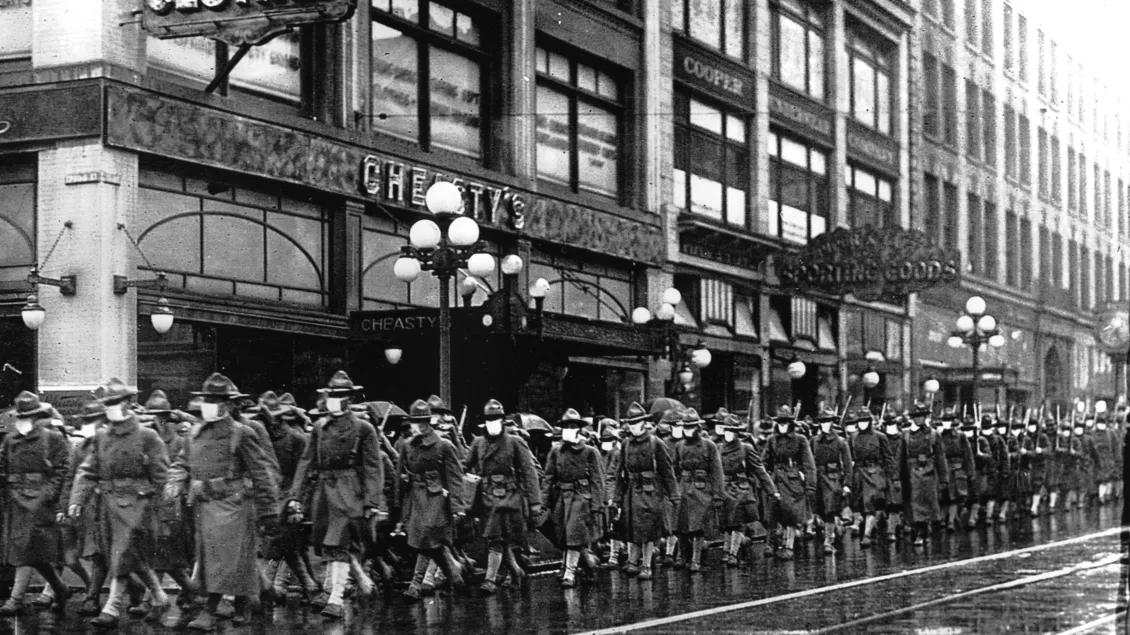
In the summer of 2005, the Center for the History of Medicine (as CHHASSEM's discpline area in the History of Medicine and Public Health was then known) was asked by the Defense Threat Reduction Agency (DTRA) to conduct research into and write a report on American communities that had experienced extremely low rates of influenza during the infamous 1918–1920 influenza pandemic (download a copy of the report).
A team of historians from the Center visited these communities to locate, assess and collect available primary source material from libraries, archives and other private and public holdings. We then undertook a historical evaluation of the non-pharmaceutical interventions (NPI) as employed by successful communities during the second wave, September–December 1918, of the pandemic.
The Study
Ultimately, we selected seven communities that reported relatively few if any cases of influenza, and no more than one influenza-related death while non-pharmaceutical interventions (NPI) were enforced during the second wave of the 1918-1920 influenza pandemic.
Because of the apparently reduced morbidity and low mortality these communities experienced during the second wave of the pandemic, we labeled them “provisional influenza escape communities.” “Provisional” means that we cannot definitively determine, on the basis of the historical evidence available to us, if these communities sustained their low morbidity and mortality rates because of policy decisions made by their community leaders and public health officials, because the virus skipped some communities altogether and varied in its behavior in other communities (viral normalization patterns), or because of other factors such as population density, geography, and good fortune.
Limited by the quantity and quality of data, we nevertheless ultimately concluded that protective sequestration (the shielding of a defined and still healthy group of people from the risk of infection from outsiders), if enacted early enough in the pandemic, crafted so as to encourage the compliance of the population involved without draconian enforcement measures, and continued for the lengthy period of time at which the area is at risk, offered the best chance of protecting a community against infection. From the data we were able to gather for this study, we could not determine the effectiveness of other NPI. Our subsequent landmark study of the public health interventions undertaken in 43 American cities during the deadly fall wave of the 1918-1919 pandemic, however, we were able to determine that the early, layered, and sustained used of NPI was associated with lower peak and total mortality.
Researchers at the University of Michigan Medical School’s Center for the History of Medicine would like to thank the following libraries, archives, and institutions for their assistance during our research and for granting us permission to digitize and present portions of their collections.
- Allentown Public Library, Allentown, PA
- California Historical Society, San Francisco, CA
- California State Archives, Sacramento, CA
- Carnegie Library, Pittsburgh, PA
- Colorado Department of Public Health, Denver, CO
- Lehigh County Historical Society, Allentown, PA
- Library of Congress, Manuscript Division, Washington, DC
- National Archives and Records Administration, Washington, DC and College Park, MD
- Princeton Historical Society, Princeton, NJ
- Saranac Lake Free Library, Saranac Lake, NY
- Seeley G. Mudd Manuscript Library, Princeton University, Princeton, NJ
- Stephen H. Hart Library, Colorado Historical Society, Denver, CO
- Trudeau Institute, Saranac Lake, NY
- Vermont State Archives, Montpelier, VT
- Vermont Department of Libraries, Montpelier, VT
- University of Vermont Archives, Burlington, VT
- Vermont Historical Society, Barre, VT
- Orleans County Historical Association, Brownington, VT
- Grafton Historical Society, Grafton, VT
- Holland Historical Society, Holland, VT
- Monkton Historical Society, Monkton, VT
The information on this site and the digital documents contain herein are intended for education and research purposes only. Commercial use of the content of this website is prohibited. For commercial use of the digital documents, please contact the owning institution.
