
Research | History of Medicine & Public Health
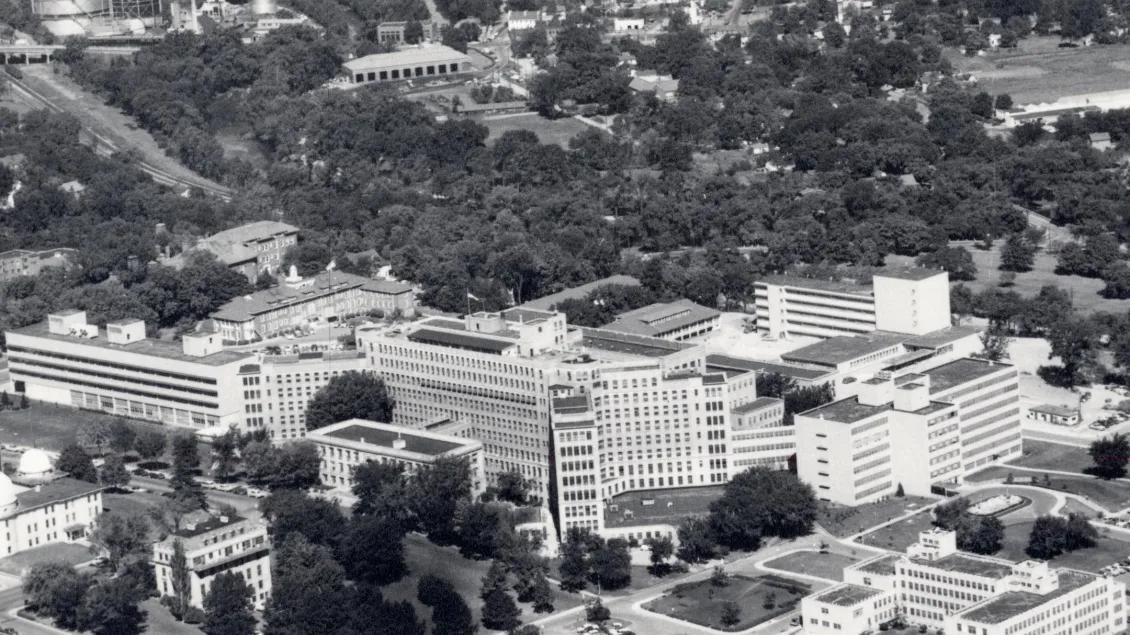
1958 aerial photograph of the medical campus

Our Research Efforts

Implemental in gathering historical epidemiological and contemporary historical information on pandemic influenza.

Historical Contributions

The Center for the History of Medicine is the premier organization for gathering historical epidemiological and contemporary historical information on pandemic influenza. The resulting scholarly work has been presented and discussed at high-level policy meetings hosted by the President’s Council of Advisors on Science and Technology, U.S. Agency for International Development, Department of Defense, Centers for Disease Control and Prevention, National Institutes of Health, Department of Health and Human Services, as well as the Institute of Medicine, the American Red Cross and the RAND Corporation.

Research at the Center focuses on a broad continuum of historical topics, including U.S. medicine and public health, science and medicine, U.S. immigration and immigrant health, eugenics, medical genetics, children’s health and tropical medicine, in order to publish research that applies historical lessons to contemporary public health policy-making.

In addition to conducting quantitative and qualitative scholarly research, the Center develops and publishes digital archives of primary materials and oral histories related to its historical and contemporary studies. The Center also directs a University of Michigan Medical School oral history program in cooperation with the U-M Bentley Historical Library.

Nonpharmaceutical Interventions 1918-1919

In 2006, the Center for the History of Medicine was contacted by the US Centers for Disease Control and Migration and asked to conduct a joint research study into the use of social distancing and community mitigation efforts by American cities during the 1918-1919 influenza pandemic.

1918 Influenza Escape Communities

In the summer of 2005, the Center for the History of Medicine was asked by the Defense Threat Reduction Agency (DTRA) to conduct research into and write a report on American communities that had experienced extremely low rates of influenza during the infamous 1918–1920 influenza pandemic.

1918 Influenza Digital Archive

The digital archive project, The American Influenza Epidemic of 1918–1919: A Digital Encyclopedia, which made its public debut on October 10, 2012, is a collaborative venture involving MPublishing, and the Division of Global Migration and Quarantine at the Centers for Disease Control and Prevention. The website is an open access digital collection of archival, primary, and interpretive materials.

School Closure Implementation 2009

In 2009, the world saw its first 21st-century global microbial outbreak, the pA(H1N1) influenza pandemic. Working with the Division of Global Migration & Quarantine at the Centers for Disease Control & Prevention in Atlanta, the Center for the History of Medicine conducted systematic qualitative research on the response to the pandemic, focusing on school closures.