
Animal Modeling Core
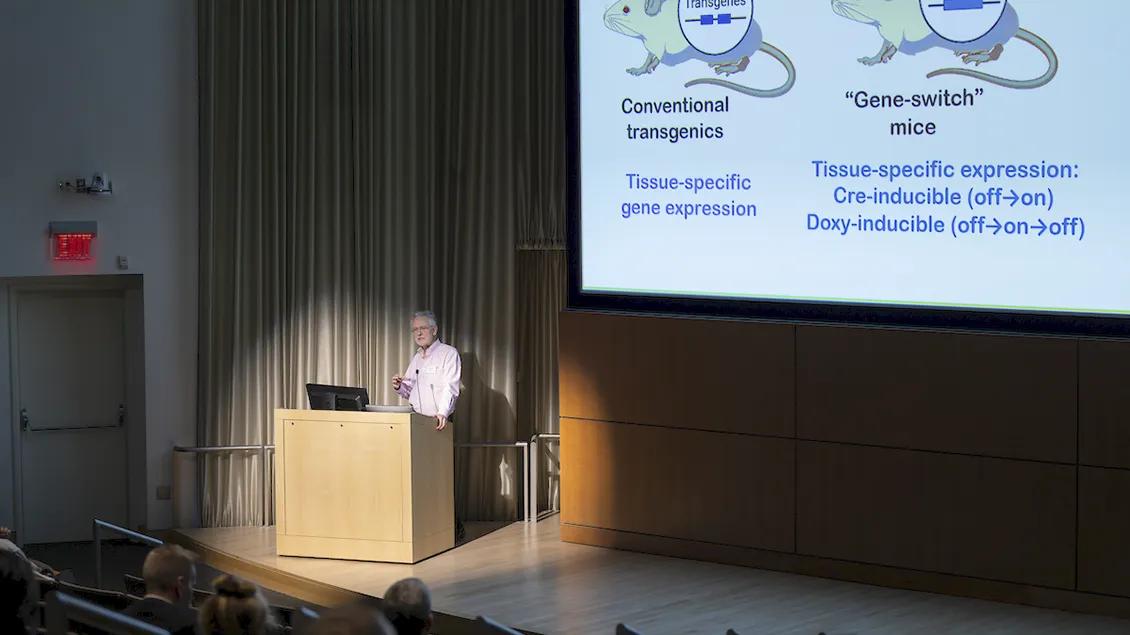
Novel murine models for in vivo discovery
The Animal Modeling Core (AMC) facilitates the development and use of state-of-the-art mouse models in skin-related research and provides relevant consultation, training, and troubleshooting for members of the Center interested in pursuing skin-related studies in mice.
Services
Consultation
The AMC supplies consultation for:
- Design and development of project-specific Genetically Engineered Mouse Models (GEMMs), including conventional, Cre-inducible, doxycycline-inducible, and conditional mutant mice.
- Production and validation of mouse models, including transgene construction, verification, genotyping, and GEMM production; screening; breeding, strain establishment, and validation.
Training
The AMC supplies training in:
- In vivo manipulation, including transgene induction protocols, UV irradiation, induction of skin inflammation by exogenous agents, bleomycin-induced fibrosis, and orthotopic xenografts and allografts.
- GEMM phenotyping, including proper tissue collection and processing; morphologic, biochemical, and molecular characterization; cross-species validation.
- Establishment of GEMM-derived primary cultures and immortalized cell lines, taking into consideration key experimental variables including body site, gender, and age.
For current AMC Service Recharge rates, please email [email protected].
Directors

Andrzej A Dlugosz, MD
Associate Chair, Department of Dermatology
Associate Director for Basic Science, Rogel Cancer Center
Professor of Dermatology and Professor of Cell and Developmental Biology
Medical School

J Michelle Kahlenberg MD, PhD
Associate Chair, Department of Internal Medicine
Professor of Internal Medicine and Professor of Dermatology
Medical School

Sunny Y Wong, PhD
Professor of Dermatology and Professor of Cell and Development Biology
Medical School
Research Acknowledgement
It is extremely important that our grant is cited in all publications resulting from the use of UM-SBDRC services and funding. Our productivity and effectiveness as a center are measured in part by the citation of the grant in published work. Please use the following acknowledgement in your publications:
This work utilized Core Services and Pilot or Feasibility project funding supported by grant UM-SBDRC 1P30AR075043 of NIH/NIAMS to the University of Michigan.
