
Mentorship Program

Promoting career success for our members and their teams
Our Mentorship Program promotes assists investigators and trainees at all stages of their careers through development of individual mentoring committees to help with:
- Establishing a focused and robust research program
- Meeting required benchmarks needed for academic promotion
- Encouraging timely manuscript and grant submissions
- Developing a collaborative approach to research
- Identifying best technology/approaches for addressing basic questions in skin biology
- Facilitating translation of research findings from bench to clinic
- Ensuring a diverse pool of successful trainees and faculty
Email any questions about our Mentorship Program to us at [email protected].
Mailing List and Dropbox Shared Files
Access to materials shared in the "MED-UM SBDRC Mentoring" folder in Dropbox is restricted to members of the UM SBDRC Mentoring M-Community group. To be added to the group mailing list and team Dropbox folder, please email: [email protected] with your UM uniqname or email address, and your department and/or lab affiliation.
For questions or to suggest additional materials for inclusion in this resource, please contact Allison Billi, MD, PhD ([email protected]) and/or Lisa Abernathy-Close, PhD ([email protected]).
Directors

J Michelle Kahlenberg MD, PhD

Andrzej A Dlugosz, MD
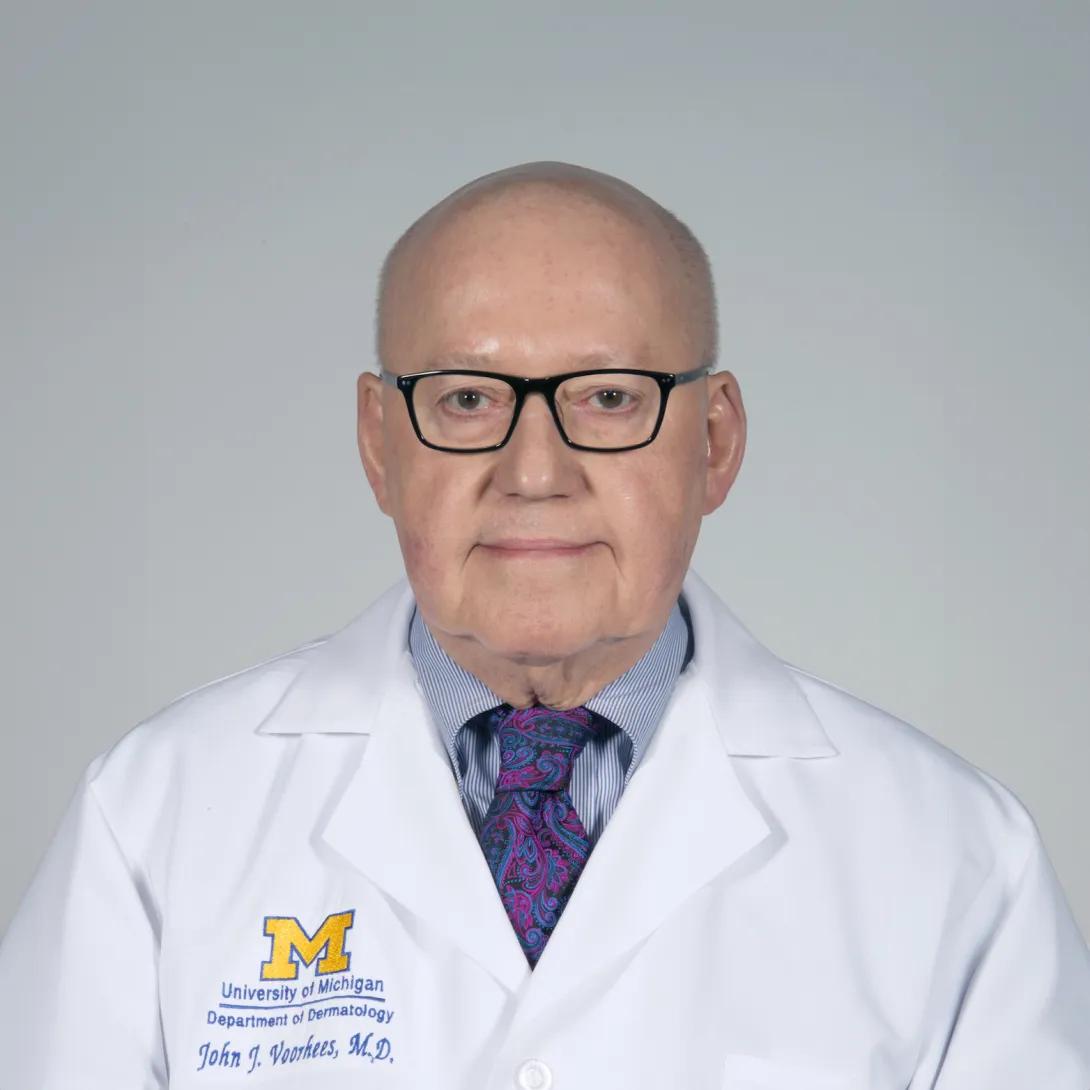
John J Voorhees
Research Acknowledgement
It is extremely important that our grant is cited in all publications resulting from the use of UM-SBDRC services and funding. Our productivity and effectiveness as a center are measured in part by the citation of the grant in published work. Please use the following acknowledgement in your publications:
This work utilized Core Services and Pilot or Feasibility project funding supported by grant UM-SBDRC 1P30AR075043 of NIH/NIAMS to the University of Michigan.
