
-
Research -
Patient Care -
Education -
People -
Shared Resources -
Cancer Data Science -
Cell & Tissue Imaging -
Epigenetics & Epigenomics -
Experimental Irradiation -
Flow Cytometry -
Health Communications -
Immune Monitoring -
Liquid Biopsy -
Pharmacokinetics -
Preclinical Molecular Imaging -
Protoemics Resource Facility -
Single Cell Spatial Analysis -
Structure & Drug Screening -
Tissue & Molecular Pathology -
Transgenic Animal Models
-
-
About -
Forbes Institute for Cancer Discovery
Flow Cytometry
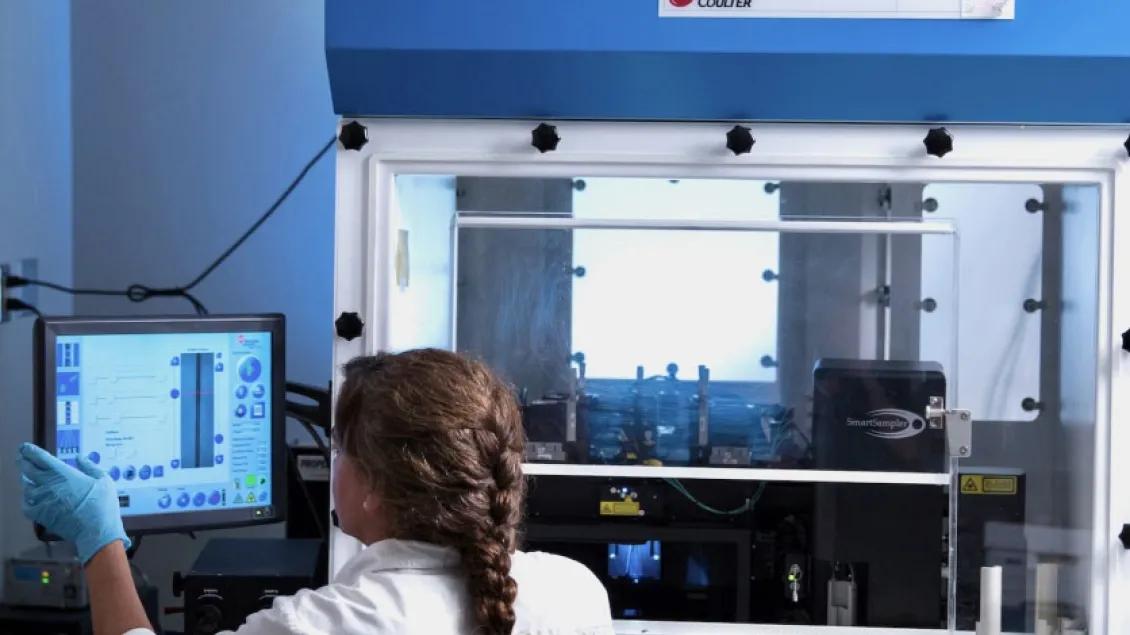

State-of-the-art flow cytometry analysis and cell sorting
The Flow Cytometry Shared Resource at the University of Michigan provides support for clinical and basic science research investigators at the University of Michigan Rogel Cancer Center as well as surrounding biotech institutions using state-of-the-art flow cytometry analysis and cell sorting.
Service Highlights
- Offers state-of-the-art cell sorting, cell analysis, and image cytometry analysis
- BSL2+ sorting capacity in all three facilities
- Assistance in grant and publication preparation and publication-quality graphics
- Data analysis and graphical representations for publication and grants
- Free project consultation and optimization with the director/managing director
- 25% discount to Rogel Cancer Center members (subject to a $2,000 per lab cap)
For more information about flow cytometry services, please contact our team:
Director: Thomas Moore, PhD
Manager: David Adams, MsEd
Locations: C574 MSRB II | BSRB A701 | NCRC Bldg 20, 134D
Phone: 734-647-3216
Convenient Locations and Core Management System for Processing Requests
With four convenient locations, Flow Cytometry uses MiCores, an online system to streamline the process of ordering and billing for service requests. This enables anyone to use this core management system to reserve time on any instrument or login to use any instrument. To learn more and/or to set up a MiCores account, please visit the MiCores website.
Instrumentation Guidance Available for Investigators
Samples are prepared by investigators in their individual laboratories. The investigators then deliver their samples to the flow cytometry lab for flow analysis or cell sorting. Additionally, instrumentation is available for individual investigators to run their own samples.
We provide various protocols as examples for instructional review as well as frequently asked questions guide investigators through the process steps of flow cytometry analysis and cell sorting.
