
Cancer Rehabilitation Fellowship
The U-M Medical School Department of Physical Medicine & Rehabilitation's Cancer Rehabilitation Medicine Fellowship prepares physiatrists to expertly evaluate, diagnose, and manage the complex functional impairments associated with cancer and its treatments. This non-GME advanced training year emphasizes both clinical excellence and academic growth in one of the nation’s leading oncology and rehabilitation environments.
Fellows benefit from exposure to a diverse patient population and a broad range of tumor types and treatment-related complications. Our close collaboration with cutting-edge oncology services ensures comprehensive, multidisciplinary care. By the end of the fellowship, graduates are equipped to manage any clinical presentation—from routine to highly complex—with confidence and skill.
For More Information
How to Apply
The Cancer Rehabilitation Fellowship lasts for one year from July 1 - June 30 annually. Candidates should have completed residency training or be scheduled to complete training in the year they are applying for position (e.g. if applying to start July 2025, you would need to graduate residency or be scheduled to graduate residency by June 2025) and be board eligible or certified in Physical Medicine and Rehabilitation. We participate in the National Resident Matching Program, and interviews are held during the fall of the preceding academic year.
Documentation Needed for Application Review
- Curriculum Vitae
- Personal Statement
- Three letters of recommendation (one from program director if possible)
Education & Learning Environment
While immersive clinical experience forms the cornerstone of the fellowship, structured academic learning is also prioritized. A longitudinal didactic series spans the year and includes:
- Focused lectures on high-yield topics including radiation fibrosis, chemotherapy-induced peripheral neuropathy, and post-mastectomy syndrome, as well as disease-specific issues. These discussions are led by our cancer rehabilitation faculty members and designed to integrate medical knowledge with practical application.
- Journal clubs emphasizing current research and critical appraisal.
- Interesting case discussions, often incorporating imaging reviews and interdisciplinary insights.
Fellows actively contribute to education within the Department of PM&R, teaching residents primarily in the outpatient setting. Each fellow also develops and delivers a departmental Grand Rounds presentation with faculty mentorship. Additional opportunities to present at regional or national conferences may be available throughout the year.
Clinical Experience
The Cancer Rehabilitation Medicine Fellowship offers a balanced blend of inpatient and outpatient care across a variety of clinical settings. Fellows engage directly with hematology and oncology patients, gaining hands-on experience in both the acute and longitudinal management of cancer-related functional impairments. There is no call obligation.
The fellow follows a structured weekly schedule designed to promote progressive autonomy and diverse clinical exposure:
- Continuity Clinic: Two half-days each week are dedicated to the fellow’s independent continuity clinic. Under faculty supervision, the fellow evaluates and manages their own panel of patients, gaining confidence in diagnostic and treatment planning skills across the spectrum of cancer rehabilitation needs.
- Attending Clinics: The fellow works closely with faculty mentors Drs. Sean Smith and Cody Andrews in the outpatient setting, allowing for direct observation, discussion, and skill-building in complex case management.
- Inpatient Service: The fellow plays a lead role in the Michigan Comprehensive Oncology Rehabilitation (MCORE) program, which delivers intensive, functional rehabilitation to hospitalized cancer patients. Responsibilities include leading a robust interdisciplinary care team, facilitating patient-centered discharge planning, and, in some cases, continuing care in the outpatient setting. Biweekly team meetings and collaboration with allied health professionals provide rich leadership and systems-based practice experience.
- Electives: Fellows have the flexibility to pursue elective rotations tailored to their individual interests. Past experiences have included orthopedic oncology, breast oncology, palliative care, neuroradiology, ultrasound-guided procedures, and lymphedema therapy. Elective time is built into the schedule whenever the fellow does not have continuity clinic, allowing for customization of the training experience.
Research & Scholarly Activity
Research is a central pillar of the Cancer Rehabilitation Medicine Fellowship. Whether you are planning a research-focused career or seeking to build foundational skills that will strengthen your clinical practice and academic profile, you will find exceptional opportunities here.
Despite the one-year duration of the fellowship, fellows are supported in developing or joining projects that are feasible, meaningful, and aligned with their interests. This experience fosters essential skills in study design, data interpretation, literature analysis, and scholarly communication—while also enhancing your CV and strengthening your collaborative network.
The program serves as the coordinating center for the Cancer Rehabilitation Metrics Consortium and is actively engaged in a range of clinical and translational research initiatives. Fellows may have the opportunity to contribute to ongoing studies or partner with investigators across the institution, including in areas such as rehabilitation sciences, oncology, palliative care, kinesiology, radiology, engineering and more.
Faculty mentors work closely with each fellow to design an individualized research plan that is achievable within the fellowship year and reflective of the fellow’s career goals. Whether your interests lie in quality improvement, patient-reported outcomes, functional metrics, or clinical innovation, you'll find guidance and support at every step.
Current Fellows
Meet our current fellows across specialties, training to be future leaders in physical medicine and rehabilitation.
Recent Graduates
Subha Hanif, MD
Mayo Clinic Department of Physical Medicine and Rehabilitation, Rochester, NY
Kelsey Lau, DO
Multicare Gig Harbor Medical Park, Gig Harbor, WA
Maaheen Ahmed, DO
Baylor College of Medicine Department of Physical Medicine & Rehabilitation, Houston, TX
Lauren Brothers, DO
University of Oakland Medical School, Corewell Health, LMT Rehabilitation Associates
James Pastrnak, MD
Indiana University Department of Physical Medicine & Rehabilitation, Indianapolis, IN
Program Leadership
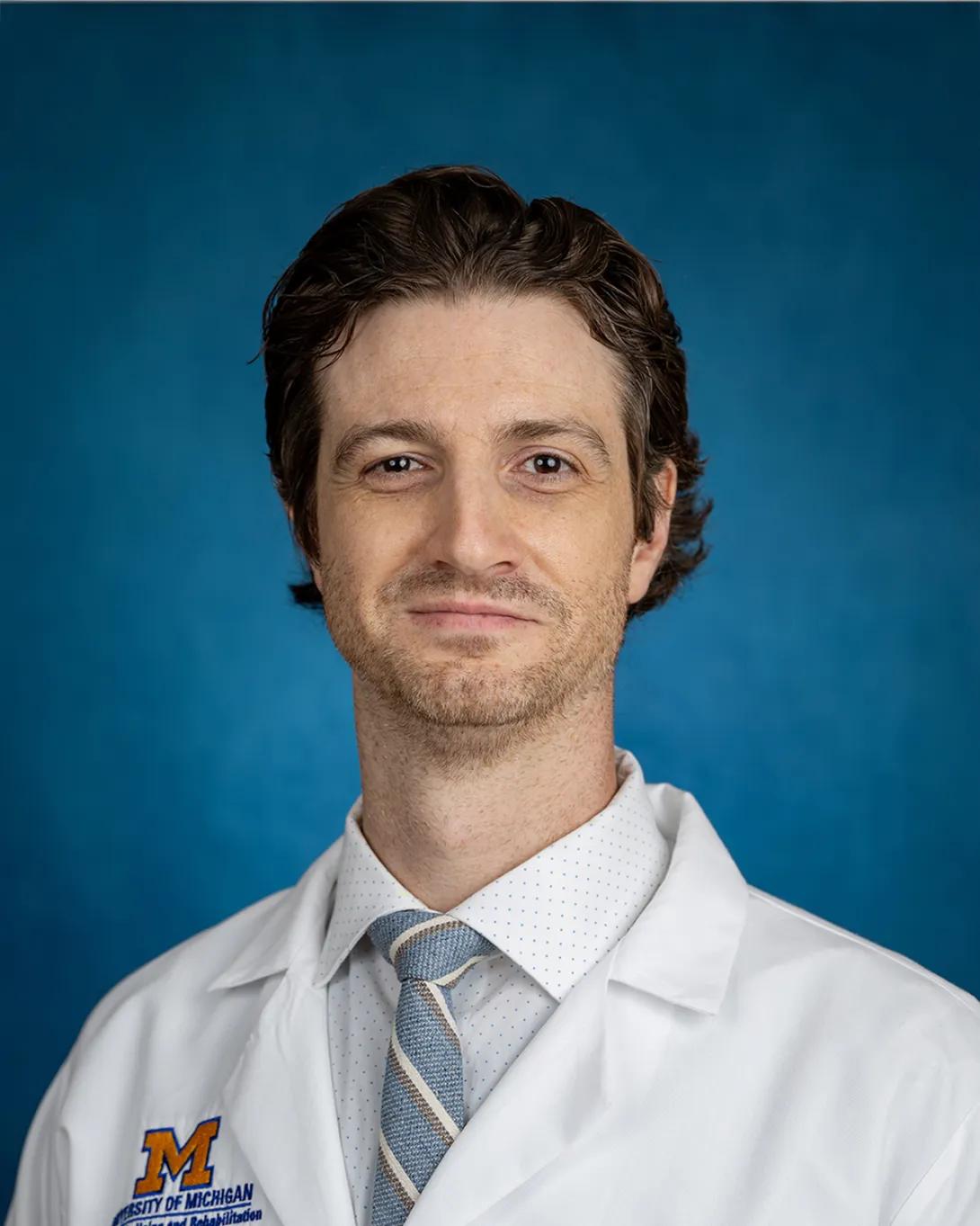
Sean R Smith, MD
Department of Physical Medicine and Rehabilitation
Clinical Professor of Physical Medicine and Rehabilitation
Program Director
Cancer Rehabilitation Program
Medical School
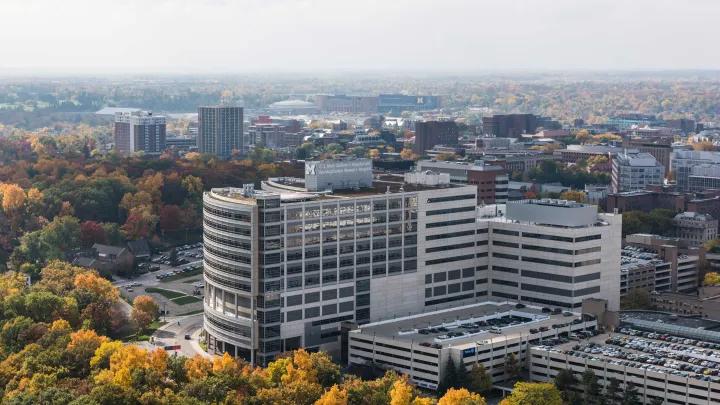
See Where Training Takes Place
The U-M Medical School campus offers numerous spaces dedicated to academic learning, research and clinical care, including specialty clinics, research labs and more. Each space and facility provides a collaborative and innovative environment for education, research and patient care.
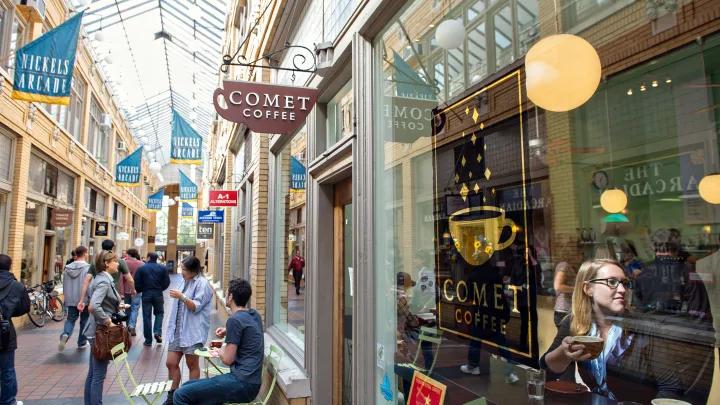
Life in Ann Arbor
We find a new reason to love Ann Arbor nearly every day — year-round outdoor activities, cultural experiences, a growing food scene, and a welcoming, family-friendly atmosphere are just a few that come to mind. Explore all that Ann Arbor and our surrounding communities have to offer.
