
PM&R Residency Clinical Rotations
Clinical rotations for the U-M Medical School Department of Physical Medicine & Rehabilitation's Physician Residency program are designed to immerse residents in key elements of our field while enabling residents to customize experiences to their unique interests and paths.
Each resident has 5 elective months (which include 4 weeks of research) and 2 additional weeks of research. A visual of the rotation layout is depicted below, divided (in rows) by inpatient, outpatient, and flexible environments, and (in columns) by PG year.
Learn more about the rotations by jumping to the sections below:
For More Information
| Rotation | PGY2 or PGY3 | PGY3 | PGY3 or PGY4 | PGY4 |
| Inpatient | SCI (1 month) General/Neuro (5 months) Pediatric with clinic opportunities (2 months) | SCI (1 month) General/ Neuro (1 month) | St. Joseph Community (2 months) Floor Senior with EDX (2 months) | |
| Consult | Neuro consults (1 month) | EDX (3 months) | Neuro Consults (1 month) | |
| Outpatient | Spine (1 month) Subspecialty (1 month) VA Junior (2 months) MSK (1 month) | Spine (1 month) MSK (1 month) VA Senior with EDX (2 months) | Procedures (1 month) Orthotics and Prosthetics (2 months) | |
| Continuity Clinic | 1 half day/week | 1 half day/week | 1 half day/week | |
| Other | 2 electives | 3 electives |
In addition, 6 weeks of dedicated research rotation time can be carved from the italicized rotations: 4 weeks from elective and 2 weeks from any others.
The diversity of Physical Medicine and Rehabilitation is probably my favorite aspect of this area of medicine. Our resident physicians get a wide variety of exposure, and then are able to hone into their clinical and research areas of interest, and in-turn become leaders in the field of PM&R.
Inpatient & Consult Rotations
Neurological rehabilitation of patients with history of recent ischemic or hemorrhagic stroke or traumatic brain injury. Medical rehabilitation of critical illness myopathy/neuropathy, amputation, orthopedic trauma, acute immune-mediated neuropathies, and other complex conditions.
Residents will work mostly with patients with spinal cord injury from different causes including trauma, transverse myelitis, cancer, and ischemia. They will gain experience managing ventilator-dependent patients. Residents will also assist a spinal cord injury fellow or physician assistant with spinal cord consults.
The resident will work under the supervision of a pediatric physiatrist attending and fellow. The resident will run the inpatient service and participate in inpatient consults.
Consultation for management and disposition for patients under consideration for neurological rehabilitation.
Two months are spent at St. Joseph Medical Center on the private rehabilitation service. This acute rehabilitation hospital has 30 beds. On this senior rotation, residents gain experience in a community hospital setting and work with physician assistants.
This Senior rotation develops skills for achieving independence in Electrodiagnostic Medicine and leadership, management and teaching skills on inpatient rehabilitation. Half of each day is spent as Floor Senior, adopting a leadership and teaching role and mentoring the junior residents on inpatient rehabilitation. Three half-days per week are spent in the EDX lab, developing advanced skills and discussing challenging cases.
Outpatient Rotations
Initial training includes three continuous months (generally during the PGY3 year) of learning how to perform electromyography and nerve conduction studies. Time will be spent with both Neurology and PM&R EDX clinics. Overall, residents will get about six months of EDX training.
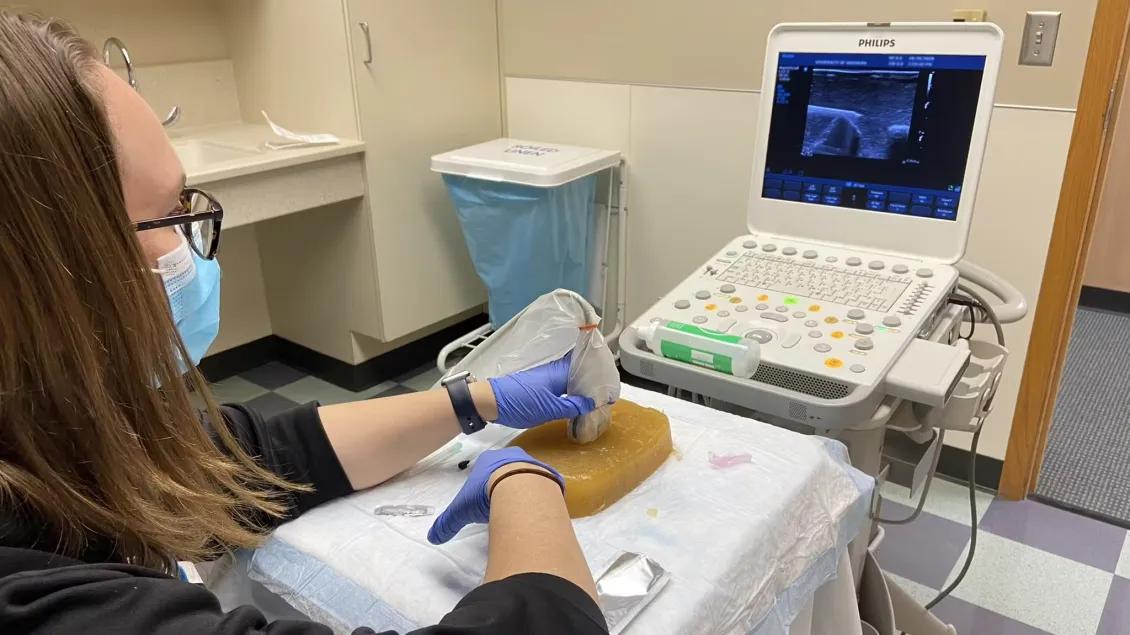
This rotation will give exposure to the evaluation and management of common musculoskeletal problems, concussion management in athletes, participation in team clinics, and learning the basics of diagnostic ultrasound, ultrasound-guided injections, as well as tenex and other cutting edge procedures.
Two months are spent on the Orthotics and Prosthetics service, which includes inpatient consults and outpatient clinics. (Wound care, lower extremity, upper extremity amputees, and adult and pediatric peripheral nerve injury clinics.)
This senior rotation allows the resident to get more experience with specific procedures including baclofen pump refills, botolinum toxin injections, MSK procedures, and interventional spine procedures.
Two months are spent at the Spine Center, an outpatient facility dedicated to the prevention and comprehensive care of spine injuries with clinic days in our fluoroscopic-guided spine injection suite.
During this rotation, the resident spends time in the rheumatology, spinal cord injury, and pediatric rehab clinics as well as multidisciplinary clinics including ALS clinic, cancer rehab clinic, Down Syndrome clinic, ventilator clinic, wheelchair seating, and wound care clinic.
Four months are spent at Ann Arbor VA Hospital through the course of the residency program. During the PGY-2 and PGY-3 years, a total of two months are spent working in a variety of outpatient clinics including musculoskeletal, orthotics and prosthetics, spinal cord injury, spasticity and pain management. During the PGY-4 year another two months are spent in same outpatient clinics as the clinics during PGY-2 and PGY-3 year with the addition of EMG as well as opportunities for Botox and ultrasound guided procedures. Overall, a large volume of musculoskeletal care and injection opportunities can be expected at the VA.
PGY-3 & 4 residents have their own continuity clinic one half day a week. This provides an invaluable opportunity to gain experience in seeing how disease processes mature while allowing residents to closely monitor the outcomes of the plans that they have put in place. This clinic also provides the resident with the opportunity to be a leading partner with the patient to help facilitate a patient's return to community/work/driving while navigating through the challenges that are presented to both the patient and the resident.
Research & Elective Rotations
Residents build a clinical elective, seeking clinical experiences of their interest. There is also the opportunity to do an away elective during this time. Educational faculty leads offer recommendations on relevant clinical opportunities, and the program administrator assists in calendaring the electives.
Six weeks of research are scheduled during outpatient and flexible rotations (see *rotations above); they are carved out in 1-week or 2-week blocks of protected time. The flexibility of scheduling affords residents the flexibility to invest in research projects at the times when project progress most demands it.
