
PM&R Residency Curriculum
Our 18-month didactic cycle comprises nine blocks, each designed and led by an Educational Faculty Lead in the clinical area. Expert faculty determines depth and breadth of content, as well as the block's unique teaching style.
A resident representative processes feedback from the resident group, and provides perspective before and after the block. Two anchor blocks recur annually to allow more recurrent learning by spaced repetition: Foundations of PM&R in July and Musculoskeletal Medicine in January.
For More Information
Didactic Cycle
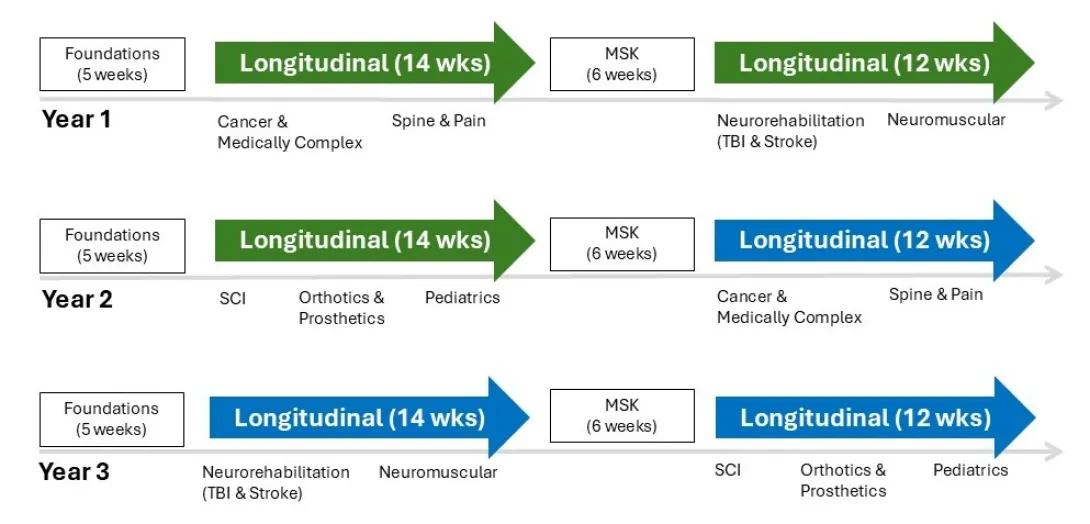
Educational faculty leads design each block of the didactic cycle to incorporate:
- Active learning methods (workshops, labs, audience response system, resident presentations, small group discussions, sub-specialty-specific journal clubs, patient panels , faculty panels, demonstrations)
- A deeper dive into important/challenging material
- Time for teaching in evidence based medicine in each block
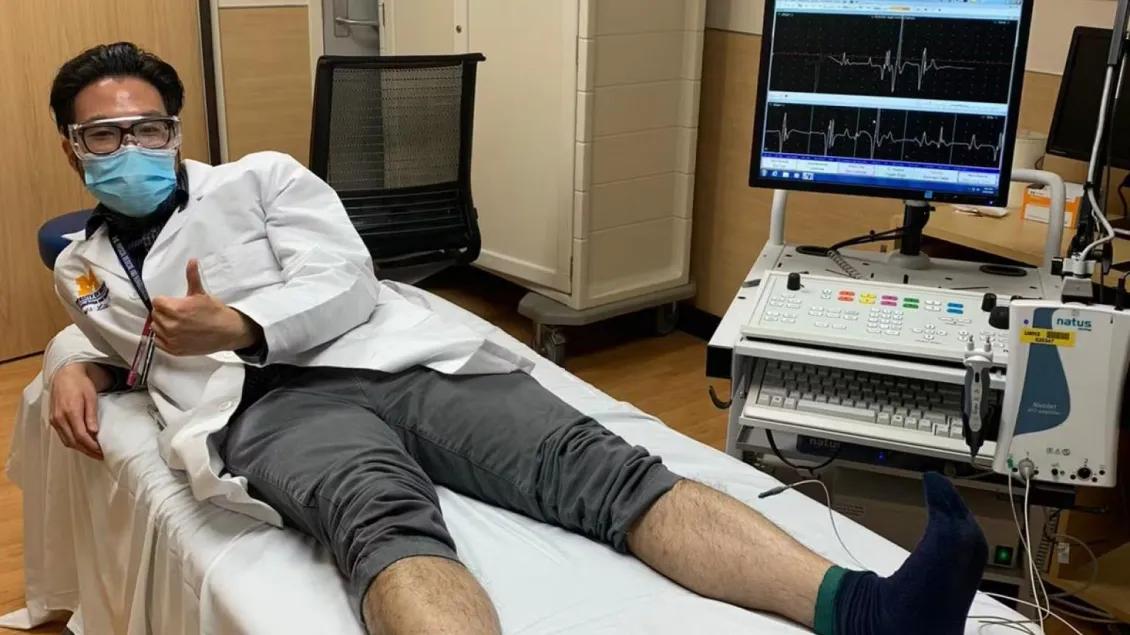
Electrodiagnostic Medicine is taught separately in an immersive 3-month block rotation (PGY3 year), with clinical and didactic instruction by PM&R and Neuromuscular Neurology.
| Day | Didactic Schedule |
| Tuesday | 8:00-9:00am: PM&R Grand Rounds |
| Wednesday | 7:15 - 8:00am: Electrodiagnostic Medicine Series (for EDX Residents) 8:00 - 9:00am: Neuromuscular Conference (for EDX Residents) |
| Thursday | 8:00 – 9:00am: Resident Didactics (Core) 9:15 – 10:15am: Resident Didactics (Core) 10:15 – 11:15am: Resident Didactics (Core) |
Focused Ultrasound Training
Our interwoven, hands-on ultrasound education enables practice and progression. Residents develop expertise in scanning the shoulder, wrist, knee, and ankle with goal of achieving competence for scanning these regions and performing associated injections.
Our Ultrasound Training Structure Sets Us Apart
The ultrasound didactic program follows an annual cycle with 12 one-hour sessions held on the third Tuesday of each month, with small group learning. Residents are divided into two groups:
- Hands-on Scanning: 1:3 faculty-to-resident ratio
- Active and Collaborative Study: Senior Resident Lead
Biweekly through the year, Dr. Adam Lewno hosts optional evening scanning sessions. It's common to see seniors teaching juniors as we learn together.
Point-of-Care Ultrasound (PoCUS) Use
For two weeks during the PGY3 year, residents borrow a point-of-care ultrasound (PoCUS) probe (that plugs into a tablet) and pursue a guided independent study program. A faculty mentor reviews scanning technique, saved images, and provides feedback.
During the 4-week PGY4 Procedures rotation, residents again borrow the point-of-care ultrasound (PoCUS) probe. Now comfortable with basic scanning techniques, they can use this month to augment learning by scanning willing patients, family members, colleagues and selves. Residents obtain and review saved images of injection trajectories and structures (joints, tendons, bursa, and nerves) different from those scanned in the PGY-3 PoCUS rotation. End-of-rotation evaluation and discussion with faculty enhances clinical application.
Self Directed Learning
Residents have access to MSKNav, an interactive ultrasound atlas, during both rotations. They are encouraged to continue scanning beyond the required procedural checklist to further develop their ultrasound proficiency.
As a PM&R resident, your time is spent learning the key components of a comprehensive functional assessment and treatment plan for a variety of patient populations. It feels incredible to finally immerse yourself in your chosen specialty, albeit at times frustrating as the learning curve can feel a bit steep. Believe me though, we all progress faster and in greater magnitude than we ever expect!
Supplemental Learning Opportunities
- James Rae Scientific Day: Themed faculty research day with invited guest speaker, held in the fall in honor of first chair of PM&R at U of M.
- Theodore M. Cole Day: Resident research day, with resident presentations and a visiting professorship; held in the spring in honor of second chair of PM&R.
- Capstone Grand Rounds: Each PGY-4 delivers a department-wide academic presentation. He/she works with a faculty mentor of choice.
- Journal Club: PGY3-led, faculty mentored journal club discussion. Research faculty attend and supplement discussions of study design and methodology.
- Morbidity and Mortality: PGY2-led, faculty mentored presentation with root cause analysis of systems-based elements of patient care.
- Interventional Spine Course: Optional evening course for residents with spine phantom models in the fluoroscopy suite. We focus on developing hands-on skills and discussion of key clinical principles, such as management of anticoagulation and potential emergencies. Led by Dr. Kohns.
- EDX Journal Club and Board Game Nights: Three times annually at Dr. Hearn’s home, residents discuss an electrodiagnostic paper over pizza, then play board games through the evening!
- Ultrasound with Dr. Lewno - Two Tuesday evenings per month, join Dr. Lewno for supplemental ultrasound scanning and practice.
- Mock Oral Boards: PGY3s and PGY4s develop mock oral exam skills through one-on-one practice cases with faculty. After each 15 minute case, residents and faculty exchange feedback and advice. Led by Dr. Hearn.
- Electrodiagnostic SAE Review: Interactive review session at Dr. Hearn’s home, focusing on key concepts, real questions, and peer-to-peer teaching. Use of audience response system maximizes participation without undue pressure.
- Fellowship Night: Faculty, fellows, senior and junior residents unite over a meal to exchange fellowship-related advice. Led by Chief Residents.
- Mentorship Meet-and-Greet: PGY2 mentors and mentees meet and exchange thoughts, reflections and insights pertaining to professional development, over dinner. Led by Dr. Hearn.
- Program Director Lunch: Monthly lunch with Program Directors. In addition to program-related discussion and conversation, residents who have traveled for conferences share experiences with the group.
- Resident Retreat & Leadership Day: Half day to discuss residency program vision and opportunities (residents only). Led by Chiefs.
- Resident Appreciation Day: Half day in the spring to connect and have fun! (residents only)
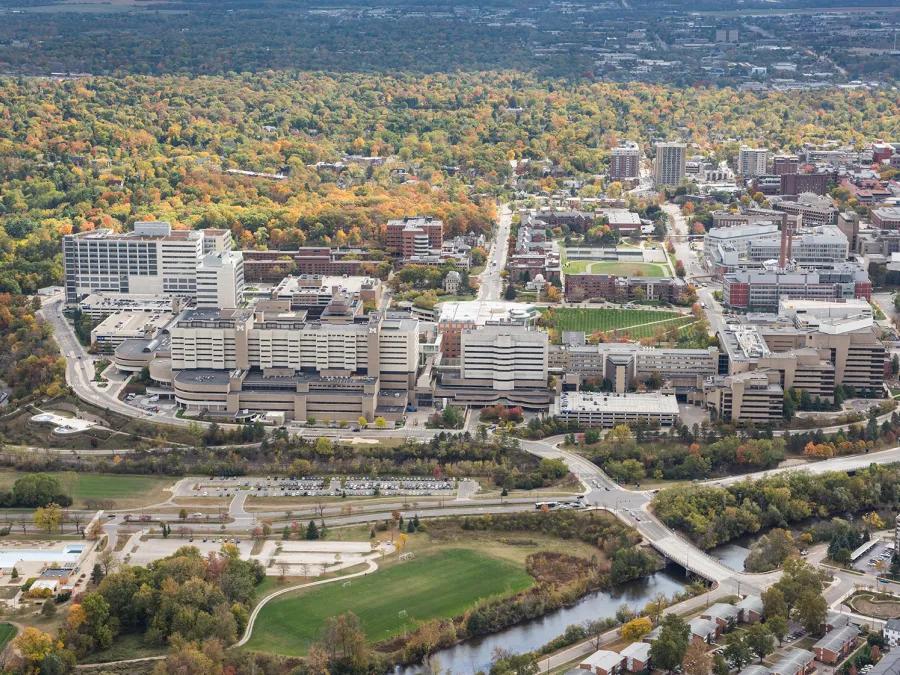
See Where Training Takes Place
Expand your career trajectory in a high-volume academic medical center that also supports and excels in a wide range of basic science, translational and clinic outcomes research programs.
