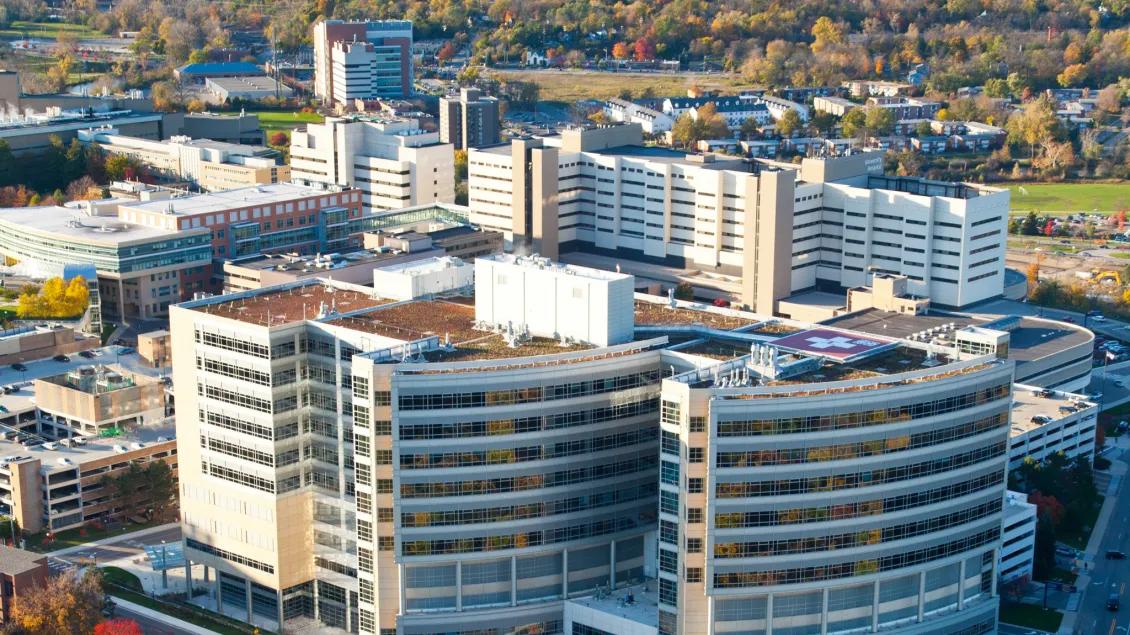
An aerial shot of the Mott campus

PM&R Labs & Research Groups

With $9.6 million in research expenditures, the U-M Medical School Department of Physical Medicine & Rehabilitation is leading advancements to improving clinical outcomes and quality of life through new medical, behavioral and technological adaptations.

Research Mission & Purpose

The Department of Physical Medicine & Rehabilitation advances both clinical and basic science research with a clear mission: to develop effective solutions that maximize health, function and quality of life for people with physical and cognitive disabilities across the lifespan. We are dedicated to clinical and translational research, while also teaching and mentoring the next generation of scientists.

Currently, our faculty and research teams are engaged in a range of impactful projects with the potential for far-reaching benefits. Areas of focus include physical activity, spine health and spinal cord injury, adapted neuropsychological assessment, pain management, cerebral palsy, neuropathies and balance, women’s health and disability and numerous other areas of research.

Our Labs & Research Groups

Briceño Lab

Studying how cultural, linguistic and social contexts affect cognitive aging and dementia risk in older adults across diverse global populations.

Kaufman Lab

Developing accessible cognitive assessments to support independence and future planning for individuals with intellectual and developmental disabilities.

JEDII Lab

Researching early signs of balance decline and fall risk, aiming to prevent falls by identifying subtle physical and neurological changes before they lead to actual incidents.

PediaTrac Research Group

Developing a web-based tool to track typical and atypical infant and toddler development from birth to 18 months, using caregiver reports to study key developmental domains and risks.

Scientist pipetting

PM&R Labs

Our faculty are leaders in the field of Physical Medicine & Rehabilitation and conduct research across several labs. Explore a list of faculty research labs.

Explore our labs

Featured News & Stories

See all news
On left side, a ReacStick is being dropped. A hand is reaching out to grab the stick with green lights illuminated. On the right side, the ReacStick is being dropped with no lights illuminated. The hand is letting the stick fall.
Health Lab

A method to prevent falls before they happen

To prevent falls, the JEDII Fall Clinic at University of Michigan Health has specialized tests they use to measure whether you could be at a fall risk before it happens
A nurse leans over the bed of a patient who is covered up and wearing a neck brace. They appear to be having a pleasant conversation.
Philanthropy News

Giving with gratitude: planned gifts support nursing, research, and patient care

Retired businessman and Detroit Tigers fan Paul Hansen has created three planned gifts to support prostate cancer research, nursing scholarship support, and adult cerebral palsy research at Michigan Medicine.
wine being poured into glass
Health Lab

Psychoactive substances and adverse side effects for patients with multiple sclerosis

Psychoactive substances can give immediate relief to people living with multiple sclerosis, but some come with adverse side effects. Research led by University of Michigan Health looks at the positive and negative impacts of using psychoactive substances to manage symptoms.
three triplets and two with head gear on with their names in pink and purple
Health Lab

A smarter helmet for the smallest patients

U-M Health specialists invented a new design for cranial shaping helmets to improve treatment for positional head deformities like plagiocephaly.
Nurse or home caregiver and senior woman holding hands at home
Health Lab

Severe strokes linked to 5 times higher dementia risk

As stroke severity increases, the risk of progressive cognitive decline and dementia substantially rises, according to a national study led by Michigan Medicine researchers.
dallas cheerleader with parents and baby and boots on right in white with green star
Health Lab

Bringing awareness to cerebral palsy through Dallas Cowboys Cheerleader boots

Two-year-old Ava Young was diagnosed with cerebral palsy as an infant. With the help of physical and occupational therapy, she has been able to make substantial progress when it comes to developing her fine motor skills. In addition to the support from her therapies, Ava also has the support of her family. In the fall of 2025, her aunt featured cerebral palsy awareness on her Dallas Cowboy Cheerleaders boot.