
Michigan Medicine Site Profile
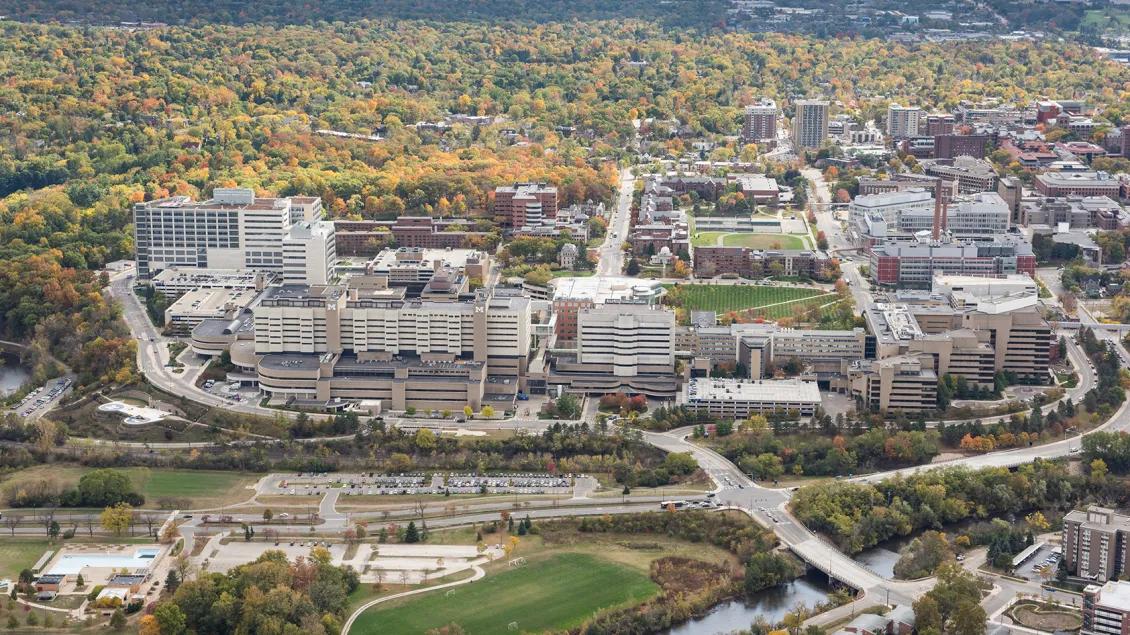
Learn how Michigan Medicine can help you successfully execute your clinical trial or study.
Michigan Medicine Overview
Michigan Medicine is a premier academic medical center made up of three hospitals with 60 subspecialties and more than 125 clinics throughout Michigan. Michigan Medicine is a national research leader based on many measures, such as the scope and quality of its investigations and the size of its research portfolio.
We are committed to improving clinical care, value, and health outcomes by successfully executing a diverse portfolio of high-quality clinical trials. To that end, Michigan Medicine created an organizational structure to better support the conduct of clinical trials, including a central Clinical Trials Support Office (CTSO) and Clinical Trial Support Units (CTSUs) that provide robust infrastructure, training, and oversight for studies performed at U-M.
By The Numbers
Fiscal Year 26
General Information
No.
Both.
Yes. Click here for an extensive list of accreditations/certifications.
Phase I thru Phase IV and post-marketing approval.
Michigan Medicine has several specialty and treatment centers, including the Rogel Cancer Center, Mott Children's Hospital, Von Voigtlander Women's Hospital, Kellogg Eye Center, and Frankel Cardiovascular Center. A complete list is available at: http://www.uofmhealth.org/locations-list/specialty-care-centers.
Cancer Care Centers:
University of Michigan’s Rogel Cancer Center – All cancers represented
Children’s Hospital:
C.S. Mott Children’s Hospital
Yes. U-M’s CTSA is housed in the Michigan Institute for Clinical & Health Research (MICHR).
Contact Information
The CTSU Portfolio Managers can assist you with identifying a potential U-M investigator and navigating the U-M system. The contact information is provided below. For general assistance, contact the central Clinical Trial Support Office.
- M-CTSU (non-oncology studies)
[email protected] - O-CTSU (oncology studies)
[email protected]
Each CTSU will provide the potential PI information, as needed.
Each CTSU will provide the study coordinator information, as needed.
Each CTSU will provide the finance administrator information, as needed.
Study Teams
Yes, more information can be obtained once an investigator has been identified, including the investigator’s CV and the population that the investigator has access to.
U-M is well positioned with highly trained study personnel, including principal investigators, co-investigators, radiologists, pathologists, pharmacists, biostatisticians, project managers, study coordinators, registered nurses, LPNs, medical assistants specialists, research assistants, multisite coordinators, laboratory technicians, database developers, data managers, regulatory coordinators, study monitors, and recruitment consultants. Each department or program personnel may vary slightly.
The number of studies each coordinator works on depends on the requirements, complexity of the studies, and how tasks are delegated.
Yes, more information can be obtained once an investigator has been identified. This information
will be provided by the CTSU.
IRB/Regulatory
IRBMED
2800 Plymouth Road, Bldg 520, Room 3214
Ann Arbor, MI 48109-2800
(734) 763-4768
Email: [email protected]
Yes, studies are conducted per sponsor requirements and follow ICH-GCP guidelines.
Yes.
Yes, electronic and remote informed consent procedures are permitted by IRBMED and must meet the same regulatory and institutional requirements as an in-person paper-based informed consent process.
Yes, when U-M agrees to cede regulatory oversight to an independent IRB. U-M currently has master agreements with Advarra, Western IRB (WCG or WIRB), Ethical and Independent IRB (E&I), and NCI CIRB. Ancillary committee review and approvals, and IRBMED acknowledgement to cede letter are required prior to independent IRB review of site. Study teams must receive the U-M IRBMED Acknowledgment letter and the independent IRB approval notice before beginning any research-related activities.
IRBMED consists collectively of 6 Boards and hosts 3 Board meetings per week. The A1 and A2 Boards meet simultaneously every other Thursday, and the B1 and B2 Boards meet simultaneously on alternating Thursdays. The C1 and C2 Oncology Boards meet on alternating Fridays.
Yes. U-M was reaccredited with Full Accreditation in 2026 for five years. U-M has held Full Accreditation
since 2008.
Certification, FWA:
FWA 00004969
To be considered for an upcoming Board agenda, all identified changes for an application must be addressed and resubmitted to IRBMED 8 business days in advance of the convened meeting. Resubmission by this date does not guarantee that the application will be reviewed at the next convened meeting.
Time from review of a study at a full board meeting and notification of the outcome is typically within 2 business days.
Yes, if a need exists, access to the interpreter services is available upon request and appointment.
Yes.
Yes, all new clinical trials in a CTSU will initially go through a feasibility review. As an NCI Designated Comprehensive Cancer Center, cancer-related clinical research will undergo a disease team review and a scientific review by Rogel’s. The reviews are conducted in partnership with the PI and CTSU.
The PRC meets on the 2nd and 4th Tuesday of each month, with submissions due 1 week prior. For non-oncology studies, there are no deadlines for feasibility submission. Approval is typically received within 5 business days.
For regulatory review, the protocol is submitted through an electronic application system. The study will proceed to the applicable ancillary committees before the application reaches the IRB for review. U-M has several ancillary research review committees, including, but not limited to:
- Calendar Review and Analysis Office
- Conflict of Interest
- Research Pharmacy
- Radioactive Drug Research Committee
- Subcommittee on Human Use of Radioisotopes
- Institutional Biosafety Committee
- Tissue Procurement Core
Studies are reviewed only by those review units that are applicable. Ancillary committee review and approval must be completed before final IRB approval is released.
Upon submission of the regulatory application, U-M’s electronic management system sends the IRB application to all applicable ancillary committees based on information provided in the application.
Meetings occur to meet the demands of the submitted studies.
Total time to approval will vary with an individual application’s review needs, including other committee reviews, application completeness and clarity at submission, and IRB reviewer schedules.
Budget & Contracts
The University of Michigan Office of Research and Sponsored Projects (ORSP) enables and safeguards the conduct of research and other sponsored activities for U-M. ORSP is responsible for activities such as contract negotiations of terms and conditions and facilitating the award as part of the U-M Office of Research. A second unit, the Office of Sponsored Programs, primarily oversees financial accounting to ensure compliance with applicable laws and sponsor regulations, such as allowed expenses and sponsor payment activities as part of U-M Business & Finance. The CTSUs closely partner with ORSP and Sponsored Programs on pre- and post-award activities.
No, the budget, other contract terms, and IRB can be developed and approved in parallel.
Yes, all new clinical trials in a CTSU will initially go through a feasibility review. As an NCI Designated Comprehensive Cancer Center, cancer-related clinical research will go through a disease team review and scientific review by Rogel’s Protocol Review Committee (PRC). Budget development will begin at PRC submission. Once approved through the feasibility review process, the general contract terms will be sent to ORSP for review. In parallel, the CTSU finance team will review the budget with the study team and lead any budget negotiations.
Once the protocol, budget, and contract are made available and approved through the CTSU feasibility process, the general contract terms will be sent to ORSP for review. In parallel, the CTSU finance team will review the budget with the study team and lead any budget negotiations.
The budget will route for internal approvals to ORSP to incorporate with the final contract language. The full contract will be processed for signatures once the budget has been routed internally for approvals and contract terms are negotiated.
The turnaround time for the final signature (once the Principal Investigator has signed) is typically less than three business days.
The Clinical Trials Support Units (CTSUs) are responsible for developing a study budget and working collaboratively with the Principal Investigator and their academic department to negotiate a final budget with the sponsor. The CTSUs will submit the final budget to the University of Michigan Office of Research and Sponsored Projects to include in the study agreement along with negotiated payment terms
In special circumstances the CTSUs will assist U-M investigators in estimating the cost of conducting a trial at Michigan Medicine based on a draft protocol. However, a final protocol, draft contract, and budget template are required for feasibility review. Once approved, the contract and budget review process will begin.
35%
Each CTSU or program can provide the budget specialist information upon request, or for general inquiries, please contact the Clinical Trials Support Office.
Payment Information
To ensure proper processing of your payment, regardless of the payment method, please notify the University of Michigan that a payment has been sent by sending an email to [email protected].
For sponsor remit payment and to ensure payment is applied correctly, include a Reference Number.
Reference Numbers should use a University of Michigan-assigned identifying number (e.g., PAF Number, P/G (Project/Grant) Number, or AWD Number). Invoice payments should include the Invoice Number or Customer Number.
For general communications regarding payment issues, contact [email protected].
Address: SSC Accounts Receivable, 1000 Victors Way Suite 1A, Ann Arbor, MI 48108-2744
Phone: 734-615-2000
Fax: 734-763-7086
Credit card payments are not accepted.
The Regents of the University of Michigan EFT Depository Account
[provide reference number as described above]
Checking Account Number: 5401125777
ABA/Routing number: 071000039
Bank Name and Address:
Bank of America
4805 Towne Centre Road, Suite 200
Saginaw, MI 48604
The Regents of the University of Michigan EFT Depository Account
[provide reference number as described above]
Checking Account Number: 5401125777
ABA/Routing number: 026009593 (from inside USA)
Swift Code: BOFAUS3N (from outside USA)
Bank Name and Address:
Bank of America
4805 Towne Centre Road, Suite 200
Saginaw, MI 48604
The Regents of the University of Michigan
Check Memo: [provide reference number as described above]
Mailing Address:
℅ BNY Mellon
Box 223131
Pittsburgh, PA 15251-2131
U-M will also accept payments via Bill.com. If the sponsor requests information, provide the following:
Account Email Address: [email protected]
Payment Network ID: 0138818634399219
Bill.com does not require invoicing (no need to contact SSC for an invoice), nor do we have to create a new account to provide this information.
Tax ID Number: 38-6006309
Contracts
Contracts are handled by the Office of Research and Sponsored Projects. Contact information for a contract specialist will be provided upon request.
1000 Victors Way
Ann Arbor, MI 48108
Yes, the CTSUs will assist with routing all draft CDAs to the Office of Research and Sponsored Projects for review and execution.
The Investigators are not authorized to sign CDAs. The CTSU/Departments will route the CDA to the Office of Research and Sponsored Projects (ORSP). ORSP will review/negotiate and sign.
Yes, we do have some MCDAs. If you would like to execute an MCDA with U-M, reach out to a CTSU Portfolio Manager. If your sponsor already has a master, please provide work order, exhibit, etc.
This varies. If an MCDA exists, it can be signed quickly. If not, CDAs are generally executed within 16 calendar days on average. The duration is impacted by the Sponsor and/or CRO responsiveness.
Michigan Medicine requires the following documents:
- Protocol
- Draft Contract
- Draft Budget
- Informed Consent
- Investigator brochure
- Study Manuals (Pharmacy, central lab, IVRS, etc.)
- Subject material requiring IRB approval
Negotiation of Clinical Trial Agreements varies and can range from a few weeks to two months from the point a contract draft is available. University of Michigan supports and encourages the use of the Accelerated Clinical Trials Agreement (ACTA) to speed the negotiation process.
Each CTSU or department administrator will provide the contract specialist information as needed upon request.
Computer & Internet
External users are required to use their unique credentials, and when working remotely, access the network through the secure Virtual Private Network (VPN).
Yes, the Clinical Research Associates (CRA/Monitor) are permitted access to the internet through wireless networks.
MGuest is the preferred network for Monitors.
MWireless is the preferred network for employees for internet access, and two-factor, Duo web login authentication is required.
Yes, we operate our Epic EMR system in line with federal, state, and local regulations, including the application of the NIST 800-53 family of controls. Epic is considered 21 CFR Part 11 compliant for electronic records and signatures.
Yes, the Clinical Research Associates (CRA/Monitor) will be able to access the EMR through our Michigan Medicine provider portal.
Yes, formal awareness training is required for all employees, contractors, sponsors, and other parties. There are documented disciplinary policies for violations of privacy or security of protected health information (PHI) or other sensitive data.
Yes, including who performed the access, what was accessed, and when the access occurred.
Michigan Medicine recommends that shared files be authorized through Dropbox. Dropbox is a secure collaborative file transfer system that provides a method approved by the Michigan Medicine Compliance Office for Michigan Medicine personnel, non-Michigan Medicine business partners, patients, and researchers to securely transfer files, including files that contain electronic Protected Health Information (ePHI), protected research data, or other sensitive information. Files are encrypted while being uploaded or downloaded and are encrypted while they are on the Dropbox server.
Yes, it is the policy of Michigan Medicine to ensure the confidentiality, integrity, and protection of all sensitive data, including ePHI. Security assessments are conducted by the office of the Chief Security Officer and research systems containing ePHI are required to have IRB approval, a risk assessment, and authorization to operate.
Yes, underlying information systems supporting clinical trials management are set up in the Michigan Medicine infrastructure to meet institutional information assurance and security requirements.
Yes, underlying information systems supporting clinical trials management have change control processes in place to test, approve and document changes.
Yes, in order to use information systems, users are required to have a unique ID managed by an Identity and Access Management team.
Systems are regularly maintained along their lifecycle from design, implementation, and operation to retirement.
Yes, Michigan Medicine has three internal EDCs that are utilized by study teams. These include REDCap (Research Electronic Data Capture), OpenClinica, and Velos eResearch. Details on these systems can be obtained here. Michigan Medicine study teams also have experience with numerous sponsor-specific EDC systems. Each CTSU can provide the list of EDC systems upon request.
Resources
OnCore Clinical Trials Management System:
All clinical trials being serviced by a CTSU are managed in OnCore, an enterprise Clinical Trials Management System. OnCore allows for automated standard interfaces with MiChart (EMR), which helps reduce duplicate data entry and integrates clinical research billing for increased efficiency and accuracy. OnCore provides complete subject and financial management for all clinical trials at Michigan Medicine. Learn more about OnCore.
Advarra eReg:
eReg is a compliant tool for managing all required regulatory documents for human subjects research. eReg integrates with the existing U-M OnCore CTMS, manages document owners and expiration dates, routes documents for signature or other notifications, and is 21 CFR Part 11 compliant for electronic signatures. eReg can share documents across multiple protocols and allows secure access for study sponsor monitoring.
Advarra eConsent is a module within Advarra eReg (level-2 login required) and is available for all studies managed in OnCore. Other studies may be accepted on a case-by-case basis. Advarra eReg is HIPAA-compliant and FDA-compliant. Teams interested in utilizing eReg and its eConsent feature can reach out to their CTSU portfolio manager or contact Clinical Trials Management Systems (CTMS) Support.
Learn more about eReg.
Facilities
Site visits can be arranged by appointment in partnership with the principal investigator or study team.
Our site is an academic medical center.
Michigan Medicine comprises 20 clinical departments, including:
- Anesthesiology
- Cardiac Surgery
- Dermatology
- Emergency Medicine
- Family Medicine
- Internal Medicine:
- Allergy and Clinical Immunology
- Cardiovascular Medicine
- Gastroenterology and Hepatology
- General Medicine
- Genetic Medicine
- Geriatric and Palliative Medicine
- Hematology and Oncology
- Hospital Medicine
- Infectious Diseases
- Metabolism, Endocrinology & Diabetes
- Nephrology
- Pulmonary and Critical Care
- Rheumatology
- Neurology
- Neurosurgery
- Obstetrics/Gynecology
- Ophthalmology & Visual Sciences
- Orthopedic Surgery
- Otolaryngology-Head and Neck Surgery
- Pathology
- Pediatrics:
- Adolescent Medicine
- Cardiology
- Developmental-Behavioral Pediatrics
- Critical Care Medicine
- Endocrinology
- Gastroenterology
- General Pediatrics
- Genetics, Metabolism & Genomic Medicine
- Hematology/Oncology
- Hospitalist Service
- Infectious Diseases
- Neonatal-Perinatal Medicine
- Nephrology
- Neurology
- Psychology
- Pulmonology
- Rheumatology
- Physical Medicine & Rehabilitation
- Psychiatry
- Radiation Oncology
- Radiology
- Surgery:
- Cardiac Surgery
- General Surgery
- Oral & Maxillofacial
- Pediatric Surgery
- Plastic Surgery
- Thoracic Surgery
- Transplant Surgery
- Vascular
- Urology
Michigan Medicine provides two dedicated locations for the conduct of clinical research: Michigan Clinical Research Unit (MCRU) and Ravitz Cancer Center Research Unit (CCRU). Both facilities provide research-supported treatment beds, chairs, and trained research staff to ensure high-quality research-focused care. Clinical trials are also conducted in other adult or pediatric inpatient and outpatient facilities throughout Michigan Medicine.
Michigan Clinical Research Unit - Frankel Cardiovascular Center
- 3 beds, 4 exam tables, a recliner (exercise room), and 4-recliner infusion bay suite
- Staffed with 3 registered nurses, 4 medical assistants, and 1 clinical research coordinator
- Equipped with an ECG machine, vital sign monitoring devices, infusion pumps, and scale
- Emergency medical equipment, including a crash cart and pyxis
- Mobile study support
- DEXA/exercise room, metabolic kitchen, and processing lab
- Cellular/gene therapy
Ravitz Cancer Center Research Unit
- 5 chairs and 1 bed
- Staffed with 4 registered nurses and 3 medical assistant specialists
- Equipped with two ECG machines and a DASH 4000 vital sign monitoring device.
- Emergency medical equipment, including crash cart
Capabilities at Both Locations
- Infusion administration
- Timed blood draws
- Urine and PK/PD sampling
- Monitor space
- Sample & storage of specimens
- Oral investigational product administration, accountability, and compliance
- Patient education regarding study medication and clinical trials
- Patient visits on weekends (scheduled on a case-by-case basis at MCRU locations)
- Language translators
All equipment is regularly calibrated and maintained to ensure accuracy and is in compliance with accrediting organizations. The list below represents equipment in the research units, however, studies have access to resources throughout Michigan Medicine.
- Computerized Tomography Scan
- Dual-Energy X-ray Absorptiometry or Bone Densitometry
- Magnetic Resonance Imaging
- Fluoroscopy
- Positron Emission
- Tomography Scan
- X-Radiation
- Mammography
- Nuclear Medicine (e.g., bone scan, thyroid scan, thallium cardiac stress test)
- Electrocardiogram
- Refrigerated centrifuge
- Centrifuge
- Refrigeration, including equipment for storage of investigational products:
- Refrigerator (2° to 8°C)
- Freezer (-20° to -30°C)
- Refrigerator (-70° to -80°C)
- Refrigerator (Liquid Nitrogen -135°C)
- Temperature monitoring by the minute, with logs maintained
- Back-up power
- Temperature alarm
Yes.
Radiology & Other Testing
Yes.
Yes.
Yes.
Laboratory
Yes. Multiple clinical laboratories are available. The Rogel Cancer Center, Michigan Clinical Research Unit (MCRU), and other independent program laboratories are available for research specimen processing, storage, and shipping. The Medical School Central Biorepository, a College of American Pathologists (CAP) accredited state-of-the-art facility, is also available for specimen storage, processing, and distribution services. There is also a sample processing lab at our Brighton offsite clinic.
Lab Locations
Michigan Clinical Research Unit Specimen Processing Lab
Frankel Cardiovascular Center
1425 East Ann Street
Ann Arbor, MI 48109
Clinical Research Specimen Processing Unit
Rogel Cancer Center
1500 East Medical Center Drive
Ann Arbor, MI 48109
M-Labs
North Campus Research Complex
2800 Plymouth Road, Bldg 35
Ann Arbor, MI 48109-2800
CLIA and CAP Certified
Central Biorepository
North Campus Research Complex
2800 Plymouth Road, Bldg 60
Ann Arbor, MI 48109-2800
CAP Accredited
Yes.
Yes. A list of CAP accreditations can be obtained at Mlabs.
Yes, all Michigan Medicine Clinical Laboratories are CLIA-certified. Clinical research laboratories do not require CLIA certification. A list of CLIA certifications can be obtained at Mlabs.
Yes.
- College of American Pathologists (CAP)
- Clinical Laboratory Improvement Act/Amendment (CLIA)
- American Nurses Credentialing Center (Magnet)
- FWA - 00004969
- Laboratory International Air Transport Association for Hazardous Materials (HAZMAT & IATA)
Yes.
Yes, the Local Normal Ranges (LNRs) can be found here.
Yes, through the Michigan Clinical Research Unit, Cancer Center, other independent program laboratories, offsite clinics, and the Medical School Central Biorepository, there are appropriate specimen storage freezers that are temperature alarmed and monitored.
Pharmacy
U-M has an investigational pharmacy with a designated lead research pharmacist assigned to each study who is responsible for assuring protocol and regulatory compliance related to dispensing and management of the investigational drug. Learn more about Research Pharmacy.
Michigan Medicine Research Pharmacy
UH B2D301, Box 5008
1500 East Medical Center Drive
Ann Arbor, MI 48109-5008
Phone: 734.936.7469
Fax: 734.647.9302
Questions? Email: [email protected]
Yes, all investigational drugs are kept in dedicated pharmacy areas with limited access to pharmacy personnel only.
Yes, the storage areas are maintained according to USP standards for drug storage, and the environment is monitored using an automated electronic system, Temp Track.
Yes, for investigational drugs that the Research Pharmacy manages.
Yes.
Yes.
Yes — copies of all policies and SOPs are available upon request.
Yes. Courier services to off-site locations may be accommodated with proper approval. Study Teams can also access research pharmacy services at off-site facilities such as Brighton, Northville, and Dominos Farms.
Yes. Investigational drugs being studied under an Investigational New Drug (IND) is eligible for interstate shipment without restriction. If a drug is not being studied under IND, but is shipped within Michigan, the drug may be eligible for shipment. Drugs not studied under IND cannot be shipped out of state.
Participant Population
DataDirect: The Medical School Office of Research has developed a self-serve tool, DataDirect, for CTSUs and study teams to use to facilitate cohort discovery. DataDirect enables access to robust, up-to-date data on more than 2 million unique patients from across the health system to inform study design and determine availability of eligible patients for study recruitment.
UMHealthResearch.org is an engaged participant registry with over 95,000 users that enables the public to view active clinical and health research studies at U-M. This platform is provided by the Michigan Institute for Clinical & Health Research (MICHR), the home to U-M's NIH Clinical & Translational Science Award (CTSA).
The portal allows potential volunteers to search studies or be auto-matched based on self-reported health history and/or interests. Study teams can communicate with volunteers and send batched messages using editable templates. UMHR posts can be linked to social media ads to connect with thousands of MM patients using the Paid, Targeted Social Media Ad Service.
MiChart (EMR): Our Practice Advisory (OPA) can be developed in our EMR as recruitment or screening tools using potential participant identifiers associated with study eligibility, diagnosis codes, problem lists, appointment dates, attending physicians, and other variables.
EMERSE: The Electronic Medical Records Search Engine (EMERSE) works with free-text clinical documents in the EMR to support rapid data retrieval.
The MICHR Participant Recruitment (PR) Program offers consultations to study teams across U-M and can assist with recruitment analysis and strategic planning that meet the needs of the study. The team works with investigators on recruitment plans that include retention strategies, development of effective recruitment materials, timelines, and community outreach.
The team offers assistance with the creation of Michigan Medicine and U-M branded recruitment materials such as brochures, posters, fliers and postcards to be distributed to potential volunteers. The PR Team can also meet with study teams to develop a robust social media campaign that includes demographic-targeted social media advertising to meet the enrollment goals set by the Principal Investigator
80% of patients reside within 50 miles of Michigan Medicine.
Adult* - 76% White, 9% Black or African American, 4.5% Asian, 3.1% Other, 6.9% refused/unknown.
Pediatric* - 72% White, 12.2% Black or African American, 5.1% Asian, 4.9% Other, 5.2% refused/unknown.
3.7% of Adults and 7.4% of Pediatric patients identified as Hispanic/Latino.
*More than 100% due to patients identifying with more than one race.
Yes, 94% of patients speak English as their first language. A small percentage speak Spanish, Japanese, Chinese, or Arabic. Interpreter services are available.
Contact Us
University of Michigan Medical School
Ann Arbor, Michigan
About Us
The Clinical Trials Support Office is a unit of the Medical School Office of Research, where our mission is to foster an environment of innovation and efficiency that serves the Michigan Medicine research community and supports biomedical science from insight to impact.
