Transplant Surgery Patient Care
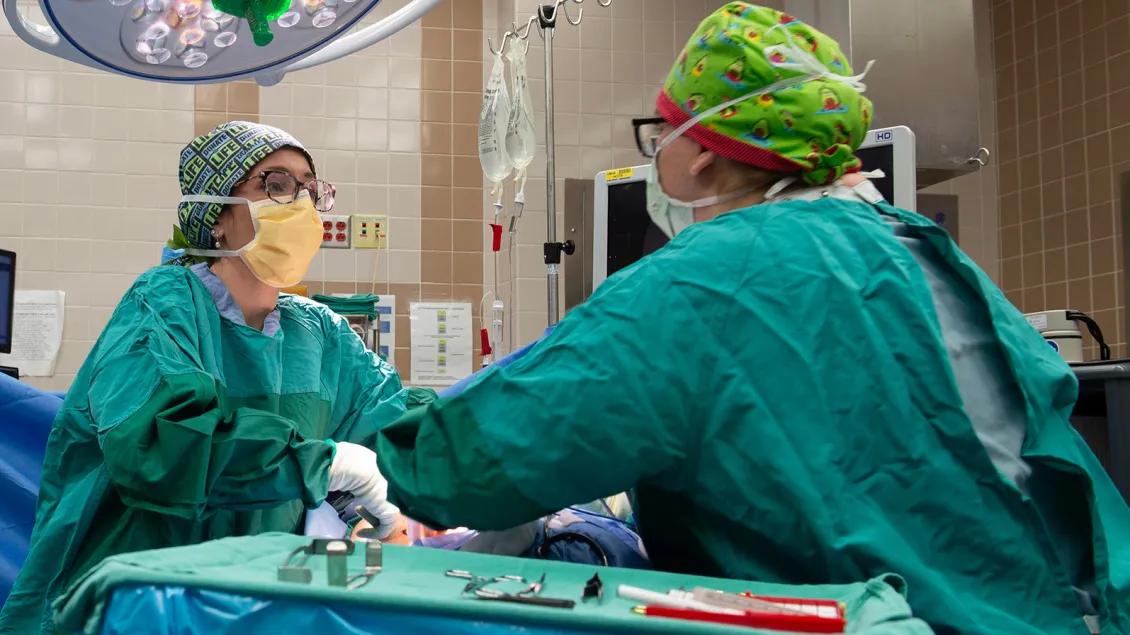
Committed to Excellence
Transplant surgery is a long journey for patients, and we honor that experience by assembling a multidisciplinary team.
About Us
Our multidisciplinary team of surgeons, physicians, nurses, dieticians, pharmacists, social workers and psychologists is dedicated to supporting the physical and emotional aspects of care.
Innovative Therapies
The feedback loop between clinic and biomedical research at the University of Michigan Department of Surgery means we’re able to offer the latest advances in clinical care.
Our work with the Michigan Surgical Quality Collaborative, a statewide collaborative of surgeons sharing outcomes data, shows our commitment to improving care for patients over the long-term by using data to improve the way we practice medicine.
Hope for High-Risk Cases
Because of our high clinical volume, our decades of experience, and our experienced team of specialists, we can help people who’ve been turned down by other centers, including those with advanced heart or vascular disease, obese patients, and those who need kidney transplants but have high antibody levels in their blood.
We offer services that are not widely available elsewhere, including a paired kidney program that uses organ-matching software developed at U-M to pair donors with hard-to-match recipients, and a desensitization program for patients with too many antibodies. We’re also one of the few programs nationwide to offer liver transplant for bile duct cancer, a procedure that requires expertise in multiple disciplines, including radiation oncology, medical oncology, interventional radiology, surgery, and hepatology. Our patients also have access to clinical trials that are working to develop the best new treatments.
Treating the Whole Person
Our philosophy of care is to engage the patient as a partner, and one of the ways we do that is through our innovative Michigan Surgical and Health Optimization Program (MSHOP), which teaches patients to make small changes in daily routine — walking, mindful breathing, and healthful eating — in order to “train” for surgery, resulting in better post-operative outcomes.
Through the U-M Transplant Center, we also cultivate a community of transplant recipients with programs like our Camp Michitanki, a summer camp experience for pediatric transplant patients, and other educational and philanthropic events.
Clinical Strengths
Dialysis Access Program
A partnership between Transplant Surgery, Nephrology and Radiology, the Dialysis Access Program offers a streamlined single point-of-contact to triage the needs of dialysis patients. Through our expertise and access to technologies many institutions don’t have — including HeRO hemodialysis access graft for patients who are catheter-dependent and laparoscopic and percutaneous perennial dialysis placement options — we’re able to provide service to patients who’ve run out of other options.
Kidney & Pancreas Transplant
We’ve performed more than 5,400 kidney transplants and more than 400 pancreas transplants, making our program one of the largest in the country. Our services include a paired kidney donation program to serve hard-to-match recipients and a kidney desensitization program for patients at risk of organ rejection due to high antibodies or blood type mismatch.
Liver Transplant
As one of the oldest liver transplant centers in the country, we perform 80 to 100 liver transplants a year. Our approach to care emphasizes a patient’s holistic health, and applies a “prehabilitation” approach centered on nutrition, exercise, and social support. Our peer mentoring program for liver transplant patients has been recognized as a model for other institutions. We also seek to improve outcomes for patients statewide by exchanging data across 7 centers through our Michigan Quality Surgical Collaborative for Liver Transplant Patients.
Liver Tumor Program
As one of the oldest liver transplant centers in the country, we perform 80 to 100 liver transplants a year. Our approach to care emphasizes a patient’s holistic health, and applies a “prehabilitation” approach centered on nutrition, exercise, and social support. Our peer mentoring program for liver transplant patients has been recognized as a model for other institutions. We also seek to improve outcomes for patients statewide by exchanging data across 7 centers through our Michigan Quality Surgical Collaborative for Liver Transplant Patients.
Pediatric Portal Hypertension
We’re one of the few centers in the country to treat high-risk patients with portal hypertension, portal vein thrombosis, or mesenteric veno-occlusive disease. We manage this complex disease with nonsurgical treatments coordinated across interventional radiology, transplant surgery, pediatric surgery and hepatology.
Pediatric Transplants (Kidney & Liver)
Our pediatric programs focus on the psychological wellness of both patient and family as they undertake their transplant journey. With more than 30 years of expertise in pediatric transplants, our approach to care emphasizes a team approach to coordinate treatment for even the youngest patients. Our post-transplant graft and patient survival rates rank among the world’s best.
Featured News & Stories
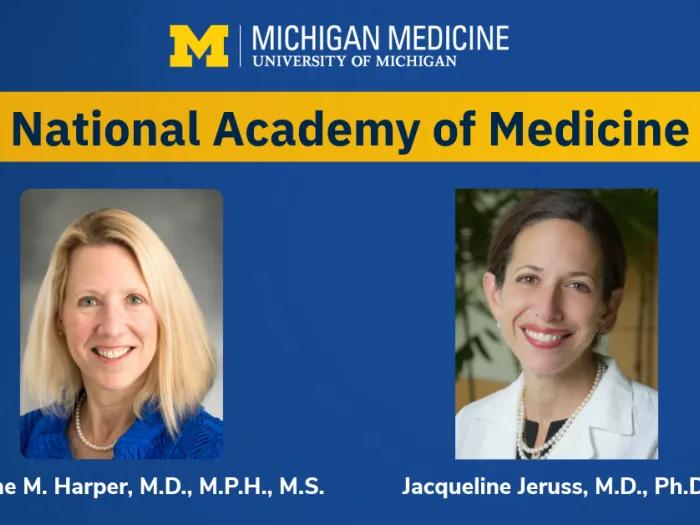
Two U-M Researchers Earn Election to National Academy of Medicine

Jacqueline Jeruss elected to the National Academy of Medicine

Exceptional response to immunotherapy gives patient with liver cancer more milestones to celebrate

Pediatric patient treated for rare kidney cancer
Advancements and trends in lung transplantation