Orofacial Pain Residency

Specialized Orofacial Pain Training
Offering advanced training in orofacial pain and dental sleep medicine.
Become a Leader in Orofacial Pain
The Orofacial Pain Residency program is a two-year post-doctoral ADA and CODA-accredited training program that provides advanced training beyond the level of pre-doctoral education in the clinical dentistry and applied basic and behavioral sciences.
The program is designed for dental graduates seeking to become expert diagnosticians and specialists at the forefront of orofacial pain and dental sleep medicine. Residents receive a certificate at the end of the program if they meet all requirements.
Whether your goal is specialty practice, research, or academic leadership, our program offers the support, mentorship and experience you need to excel.
Why Choose Michigan
Comprehensive, multidisciplinary training: Collaborate with leaders across multiple specialties, including Oral and Maxillofacial Surgery, Otolaryngology, Neurology, Rheumatology, Physical Medicine and Rehabilitation, Anesthesia, and Sleep Medicine, gaining exposure to the latest procedures, treatment strategies and multidisciplinary care models.
Rigorous clinical rotations: Rotate through specialized clinics, participating in case discussions, rounds and procedures. Build hands-on skills while working with top physicians, dentists and allied health professionals committed to collaborative, patient-centered care.
Robust academic experience: Engage in a dynamic curriculum featuring regular lectures, seminars, literature reviews and case-based learning. Deepen your knowledge of pain physiology, diagnostics, and biopsychosocial approaches to treatment..
Cutting-edge research opportunities: Pursue research projects with renowned faculty mentors and present your findings through abstracts or publications. Our program prepares you to be both a skilled clinician and an impactful scholar who contributes to the advancement of the field.
Service and leadership: Broaden your impact by providing care for patients whose needs go beyond the reach of general dentistry. Shape the future of orofacial pain management by teaching medical students.
- Pathway to board certification: Graduate prepared for certification by the American Board of Orofacial Pain, equipped with the clinical, academic, and professional skills to thrive as a leader in clinical care, research and education.
How to Apply
The Orofacial Pain Residency Program does not participate in the MATCH. You must apply to our program through PASS.
Application Timeline:
- Applications Open: May 14, 2026
- Application Deadline: September 15, 2026
- Interview Date: October 16, 2026
The University of Michigan Orofacial Pain Residency Program will conduct in-person interviews for the 2027–2028 cycle on the date listed above.
Applicants who have completed a course of study at a Commission on Dental Accreditation (CODA)-accredited dental school, and who have graduated with a DDS or DMD are eligible to apply.
Dental graduates should meet the following criteria:
- Have passed the Integrated National Board Dental Examination (INBDE) or the National Board Dental Examination (NBDE) Part I and Part II exams.
- Are eligible for a full Michigan Dental and Controlled Substance License. Click here to view Licensure Requirements
- Must be a US citizen or permanent resident.
This program is unable to support applicants who require visa sponsorship.
The U-M Medical School Hospital Dentistry Orofacial Pain program is committed to a policy of nondiscrimination and equal opportunity for all persons regardless of race, sex, color, religion, creed, national origin or ancestry, age, marital status, sexual orientation, disability or veteran status.

Salary & Benefits
The University of Michigan offers highly competitive salaries and tremendous benefits to our residents/fellows. An overview of salary, benefits and employment eligibility is available on the University of Michigan Medical School website.
Curriculum
The residency consists of four integral components that support the overall objective of graduating the trainee: patient care, education, research and service.
Residents work with orofacial pain specialists in the Temporomandibular Disorder & Orofacial Pain Clinic to assess, diagnose and manage a diverse and complex patient population in orofacial pain.
Residents rotate on various medical services across Michigan Medicine’s academic medical center, home to three hospitals and six specialty centers in Ann Arbor. Formal rotations include Oral and Maxillofacial Surgery, Otolaryngology, Neurology Clinic, Headache and Neuropathic Pain Clinic, Pediatric Rheumatology, Adult Rheumatology, Physical Medicine and Rehabilitation, Movement Disorder Clinic, Anesthesia Pain Clinic, and Sleep Medicine Clinic.
Training includes comprehensive assessment, diagnosis and treatment planning to address orofacial pain diagnoses. These diagnoses include, but are not limited to: temporomandibular disorders, neuropathic pain disorders, neurovascular disorders, sleep-related breathing disorders and other facial pain disorders. Trainees work closely with other specialists when appropriate, as well as with referring dentists and physicians for a multi-disciplinary approach to pain management.
Each resident will gain experience and competency in treating orofacial pain and develop the following skills:
- Obtaining an accurate patient history and physical examination
- Recognizing what additional information is necessary to request adjunctive diagnostic or radiographic testing
- Ordering and interpreting appropriate tests and lab results
- Accessing the information to arrive at a reasonable differential diagnosis
- Instituting an appropriate treatment plan based on the differential diagnosis
- Identifying when not to treat
- Monitoring a patient’s progress and amend a diagnosis and treatment plan accordingly
Residents participate in a rigorous didactic schedule including lectures, case conferences, multidisciplinary conferences and journal clubs that emphasizes topics beyond the level of a pre-doctoral OMFS curriculum.
These conferences are scheduled in a regular weekly and monthly fashion and provide additional education to the resident on a variety of topics in orofacial pain. They will gain advanced knowledge of the anatomical, physiological and psychosocial aspects of orofacial pain and understand the biopsychosocial model of pain. Furthermore, residents will learn and apply scientific principles for the care of patients and gain the knowledge of professional ethics and implement it into their practice.
Residents engage in meaningful research in clinical, basic science, translational and orofacial pain education topics. Residents are supported in travel to present their research.
The overall objective in this area is to emphasize thorough clinical investigation, professional presentation, and publication in a professional journal. Residents will be able to teach utilizing evidence based practice. Residents are expected to have submitted an abstract or journal article for peer review before the end of their second year. They may also be able to participate in ongoing research in the area of orofacial pain and sleep medicine depending on the availability and again type of research that is present at that time. The lead researcher will determine the project and degree of participation for the resident.
The goal of this area is for residents to be of service through the dissemination of knowledge to the population in general with specific focus on patients, dental and medical students, and healthcare colleagues. Furthermore, we recognize and gain from service opportunities by treating patients who need specialized care that cannot be effectively delivered in the general dental and medical community.
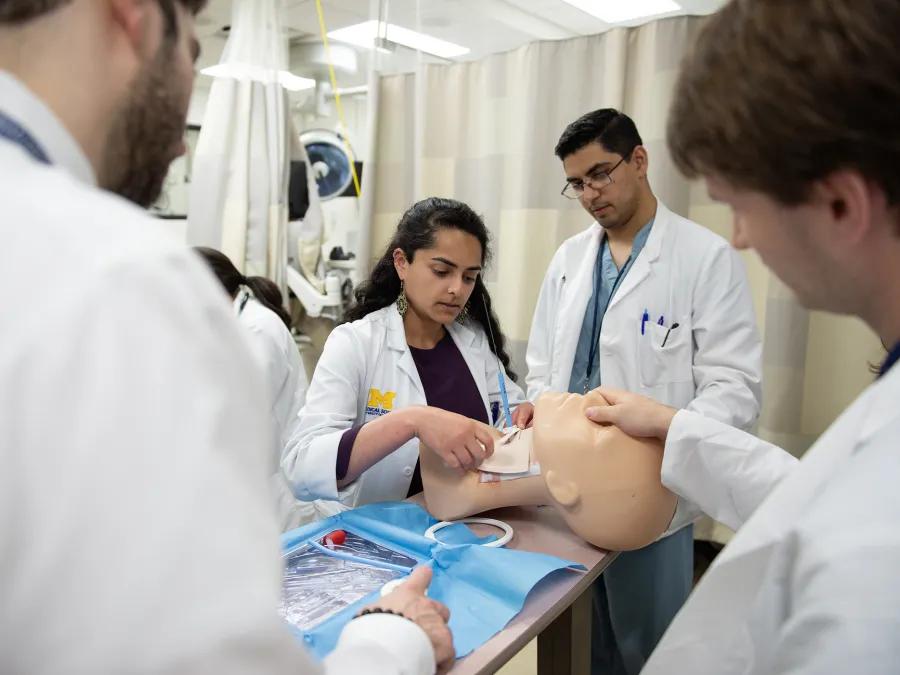
Meet Our Residents
The Department of Surgery at the U-M Medical School is comprised of a diverse and dedicated team. Under the guidance of dedicated faculty, residents develop skills that equip them to exceed the highest standards of patient care and research.
Recent Graduates
Stefany Barba, DMD
Lauren Hensick, MS, DMD
Zena Khorfan, DMD
Andrea Numbers, DMD
Kristine Phillips, DDS
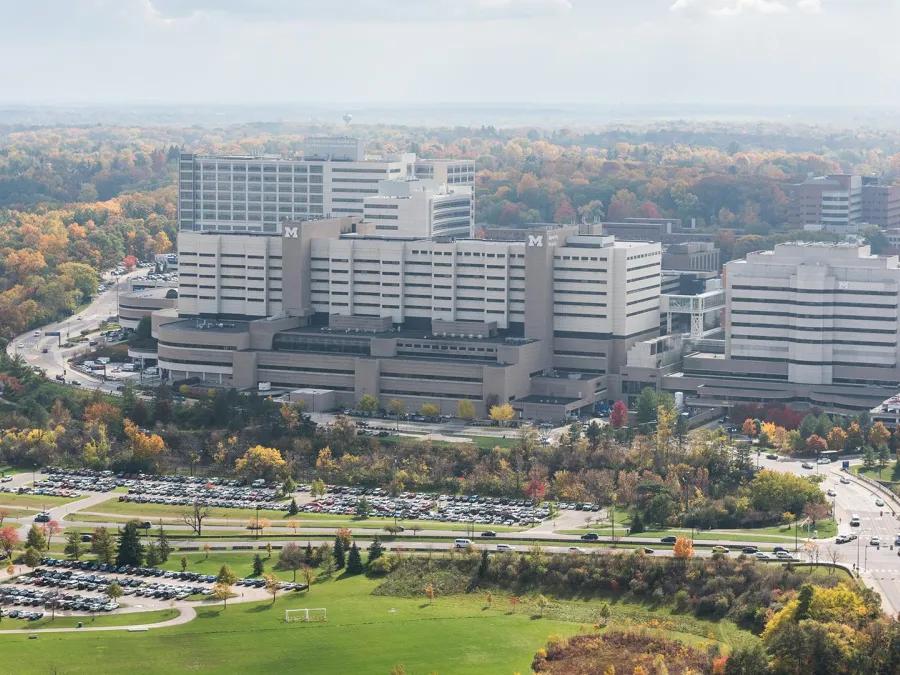
Michigan Promise
The Michigan Promise aims to empower faculty members and residents in the Department of Surgery to achieve professional success. We support initiatives connected to environment, recruitment, leadership, achievement, innovation and outreach.
Program Leadership