Transplant Surgery Research
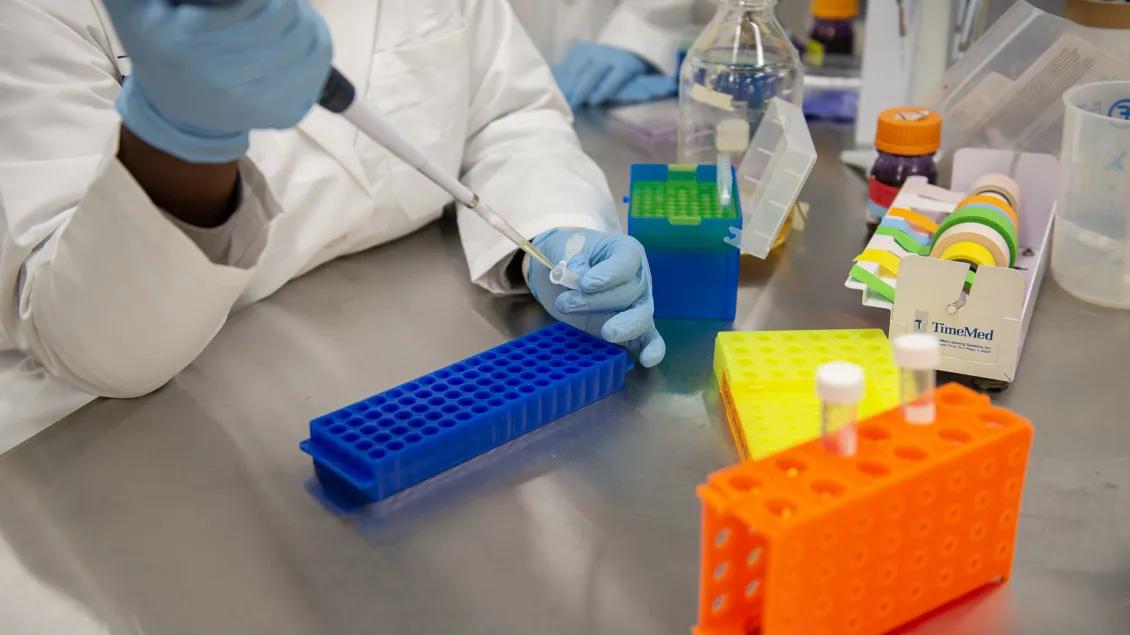
It’s a short distance from bench to bedside at the U-M Medical School Section of Transplant Surgery as our investigators make discoveries that translate directly to health and quality improvements for our patients.
Our research spans basic, translational and health services to make an impact on everyday life and push the frontiers of our field further.
This important research is supported in part by generous gifts. If you are interested in helping us pursue breakthroughs in surgical care, you may explore various ways you can give to support surgery research in the Section of Transplant Surgery.
For More Information
Discovering the Future of Transplant Surgery
With a culture of multidisciplinary collaboration, our transplantation scientists are nationally recognized for their contributions and creative breakthroughs. With the support of some $7.7 million in annual grant funding, we have the resources to make investigation a strong focus for the Section of Thoracic Surgery.
U-M transplantation scientists were the first to pursue novel methods of genetic engineering as a strategy for replacing organs and are using those strategies today to generate new sources of tissues and cells, potentially derived from the person needing treatment.
Multidisciplinary Collaborations
Cross-departmental, multi-center and statewide collaborations extend the reach of our research impact. Our faculty work closely with faculty across the university at the Center for Healthcare Outcomes & Policy studying health outcomes research.
We collaborate with Blue Cross Blue Shield and the Michigan Department of Health and Human Services through the Michigan Opioid Prescribing and Engaging Network (MOPEN) to reduce opioid abuse and overdose through better prescribing, patient education, and community outreach.
Areas of Research
Transplant surgeons are researching different aspects of cancer and tumor biology, ranging from the treatment of locally-advanced pancreatic cancer and the multidisciplinary treatment of hepatobiliary malignancies to immunotherapies.
Transplant surgery faculty members are researching how to improve healthcare outcomes and policy in a variety of different fields, including reducing opioid use, improving surgical outcomes, the impact of improving patient health before surgery and developing national policy on transplantation.
U-M transplantation scientists discovered that organ transplants are not merely passive targets of the recipient’s immune system but rather change in ways that can help prevent rejection. They have also devised new ways to look at the immune cells that recognize and potentially destroy a transplant, a potential spring board to developing novel ways of controlling those cells without broadly compromising immune control of infections.
Extracorporeal life support (ECLS) technology was developed at Michigan Medicine nearly 50 years ago. Based on this technology, transplant surgery faculty members investigating new ways to resuscitate and heal donor organs to expand today's inadequate supply.
Labs & Research Groups
Featured News & Stories

Jacqueline Jeruss elected to the National Academy of Medicine

Exceptional response to immunotherapy gives patient with liver cancer more milestones to celebrate
Advancements and trends in lung transplantation

State of Michigan allows tax credit for private employers of living organ donors

Lung transplant recipient stays active climbing stadium steps and more post-transplant