Internal Medicine: Faculty Recruitment
Join Our Team
The Department of Internal Medicine offers a dynamic and diverse workplace where faculty make meaningful contributions to patient care, education and research.
Faculty Departmental Open Positions
The University of Michigan Medical School’s Department of Internal Medicine is highly committed to the development of academic physicians and physician scientists. As an integral component of this commitment, the Physician Scientist Training Program (PSTP) was created in 2005 with the goal of developing the next generation of University of Michigan academic researchers.
The Department’s PSTP adheres to the policies and procedures of the American Board of Internal Medicine’s (ABIM) Research Pathway to assure individuals are eligible for board certification in Internal Medicine and their subspeciality of choice. This short track program allows individuals to participate fully in the categorical internal medicine program as PGY-1 and PGY-2 residents. Rotation schedules are individualized to ensure appropriate experiences before entering the fellowship program.
The duration of the ABIM Research Pathway is generally six to seven years, depending on subspecialty clinical training requirements. Trainees must complete the required Internal Medicine training, subspecialty clinical training, and 36 months of research training. Eligibility for Internal Medicine and subspecialty board certification depends on completion of ABIM requirements and the relevant ABIM examination schedules. Based on satisfactory clinical and research progress, faculty appointment as a clinical instructor is anticipated in the final year of the program.
PSTP Highlights
- Each year, PSTP receives an average of 80-100 applicants and conducts roughly 40 interviews.
- The program currently has four residents in training.
- The department has a total of 18 PSTP fellows and clinical instructors who are specializing in the Divisions of Hematology and Oncology (10), Gastroenterology and Hepatology (3), Cardiovascular Medicine (2), Metabolism, Endocrinology and Diabetes (1), and Pulmonary and Critical Care Medicine (2).
- 20 current Internal Medicine faculty completed their training through the PSTP; 6 program graduates have established labs at other universities.
Position Overview
The Internal Medicine PSTP director will provide strategic leadership and hands-on oversight of the program, supporting its mission to train and develop the next generation of physician-scientists. The PSTP director will foster an environment conducive to scholarly and professional growth, ensure program compliance, and serve as the primary mentor and advocate for PSTP residents while continuing to support these trainees as fellows, clinical instructors, and early career faculty.
Key Responsibilities
Recruitment and Selection
- Review applications for the PSTP track and, in collaboration with the Internal Medicine residency program director and fellowship program directors, select applicants for interviews.
- Coordinate, introduce, and participate in PSTP applicant interview days, conducting interviews with PSTP applicants.
- Participate in categorical interview days as an APD interviewer.
- Lead the generation of the PSTP track rank order list for National Resident Match Program (NRMP) submission in collaboration with the PSTP Associate Director, Fellowship Program Directors and Internal Medicine Program Director.
Professional & Program Development
- Participate in Office of Physician-Scientist Education & Training (OPSET) initiatives and activities.
- Collaborate with faculty and institutional partners to support program growth and continuous quality improvement.
- Assist with curricular and career advising, including funding opportunities, coaching on chair talks and professional development.
- Provide longitudinal mentorship and career development for PSTP trainees across residency, fellowship, and the transition to early faculty roles.
- Provide mentorship and guidance to advanced trainees transitioning to independent faculty on obtaining NIH and other federal funding to support one’s scientific career.
- Monitor trainee progress from residency through fellowship and into early faculty roles, partnering with fellowship program directors, division chiefs, and departmental leadership to identify and facilitate research mentorship, scholarly opportunities, and other resources that support trainees’ career goals.
Resident Evaluation and Progression
- Attend Clinical Competency Committee (CCC) meetings and residency recruitment ranking meetings.
- Prepare comprehensive resident evaluations and presentations of PSTP trainees at CCC meetings.
- Conduct mid-year progress reviews with PSTP residents, provide career development guidance, and enter milestone data into MedHub.
Program Administration and Communication
- Lead monthly PSTP meetings with the PSTP associate director; organize and lead biannual informal gatherings for PSTP residents.
- Meet weekly with chief medical residents and IM residency leadership team to discuss and address programmatic issues and updates.
- Lead monthly PSTP meetings with the PSTP associate director; organize and lead biannual informal gatherings for PSTP residents.
Compensation and Support
- Reports to Internal Medicine Residency program director
- The PSTP director will partner with an associate program director and is supported by a program administrator who manages day-to-day operations.
- Protected effort is expected to be 20%.
- Professional development funds are available through the residency program to cover annual AAIM conference registration.
Required Qualifications / Candidate Qualifications
- Established record as a physician-scientist, demonstrated through scholarly productivity, research leadership, peer-reviewed publications, extramural funding, or comparable academic accomplishments.
- Experience mentoring residents, fellows, or early-career faculty pursuing physician-scientist or research-intensive careers.
- MD/PhD, MD, DO or equivalent medical degree.
- Hold an appointment of associate professor or above.
- Completion of an accredited Internal Medicine residency program and, where applicable, subspecialty fellowship training.
- Current certification by the American Board of Internal Medicine or an equivalent certifying body.
- Possess or be eligible for an unrestricted license to practice medicine in the State of Michigan and for credentialing at Michigan Medicine.
Application Information
Applications should include a detailed curriculum vitae and a letter of interest that highlights the applicant’s relevant leadership experience. To ensure full consideration by the search committee, applications should be submitted electronically, in confidence, to:
Weston Lawler
Administrative Manager
Office of the Chair
Department of Internal Medicine
[email protected]
734.936.8048
Faculty Division Open Positions
Division faculty are actively engaged in research and are committed to providing patients with the very best in patient care and treatment.
Faculty Affairs
The Department of Internal Medicine Office of Faculty Affairs is committed to developing, supporting and mentoring our faculty’s academic careers. Our office, in collaboration with the U-M Medical School Office of Faculty Affairs, provides support and resources for numerous activities including faculty recruitment, appointments, reappointments, promotions and compensation.
Faculty Promotions
Our promotion and tenure process occurs on an annual cycle. The promotions committee advises the Chair of the Department of Internal Medicine on granting promotions and tenure to eligible faculty members. Specific criteria has been developed by the committee to assist faculty members in attaining their goal of promotion and tenure. As you can see below, our annual number of promotions reflects the high level of academic achievement of our faculty and the recognition they receive for it.
Career and Personal Development
The Medical School Office of Faculty Affairs offers a wide range of workshops, events and programs to assist faculty in achieving success in their teaching, research, and leadership career goals, in addition to their interpersonal development and health and well-being. View a full list of current workshops and events and programs.

Life in Ann Arbor
We find a new reason to love Ann Arbor nearly every day — year-round outdoor activities, cultural experiences, a growing food scene, and a welcoming, family-friendly atmosphere are just a few that come to mind. Explore all that Ann Arbor and our surrounding communities have to offer.
Opportunities for All to Thrive
Michigan Medicine is dedicated to recruiting and retaining a workforce that reflects our commitment to serving the people of Michigan and upholding the University’s standard of excellence. We welcome applications from all individuals who would bring new perspectives to the University’s research, teaching, and clinical missions.
The Department of Internal Medicine, like the University of Michigan as a whole, is firmly committed to a policy of nondiscrimination and equal opportunity for all. We will not discriminate based on race, color, national origin, age, marital status, sex, sexual orientation, gender identity or expression, disability, religion, height, weight, or veteran status. The University of Michigan is an Equal Employment Opportunity Employer.
Contact Us
Contact Us
3110 Taubman Center, SPC 5368
Ann Arbor, MI 48109-5368
Featured News & Stories
Human Rabies Exposures Growing Across the Country

Top 7 tips for choosing Medicare prescription drug coverage for 2027
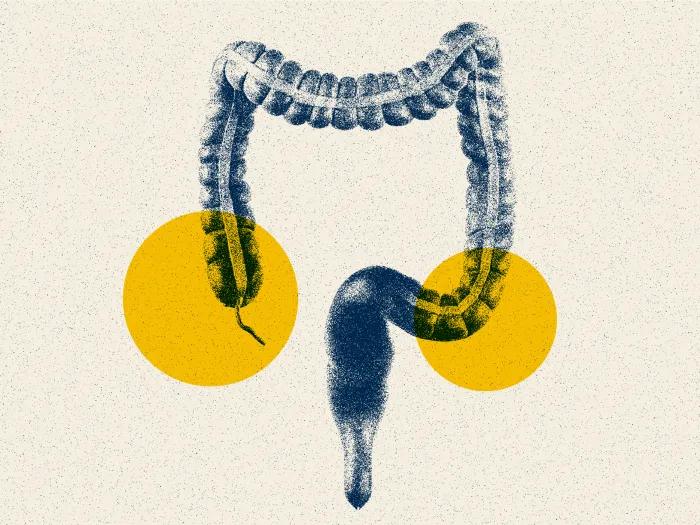
Enzyme supplement improves IBS symptoms for most in new study
Family’s gift honors wife and mother, supports nephrology nurses

Gene editing is coming for common diseases. Are we ready?