Internal Medicine Research

Neph lab

Transformative Research at a Top-Funded Institution

Where great science is changing the lives of our patients in Michigan and beyond.  

Dedicated to Improving the Practice of Medicine

The University of Michigan Medical School Department of Internal Medicine has a robust research community and successfully competes for funding from national agencies, foundations and industry-sponsored projects. Scientists here are dedicated to identifying and implementing real solutions to redefine how we practice medicine.

In FY2024, the University of Michigan was awarded a record $2.04 billion in research funding. Of this, the Department of Internal Medicine was responsible for $260 million from over 1,200 grants. In addition, the department published nearly 4,100 peer-reviewed research publications. 

Exploring Research Excellence

Dr. Michelle Kahlenberg discusses the faculty mentoring, state-of-the-art facilities, and comprehensive grant support that empower clinical, translational, and health services researchers to thrive.

Our Research Areas

Basic & Translational Research

We have active basic and translational research programs in many of our subspecialties, continually expanding scientific knowledge and ultimately advancing patient care.

Clinical Research

With health services and clinical researchers working together, we can make quicker advancements to improve patient care.

Research Conferences & Education

Research Symposium

The Department of Internal Medicine Annual Research Symposium showcases the research projects completed by our residents and provides an opportunity for fellows and students, as well as faculty, to present their work and interact with department members. A focal event of the symposium is Grand Rounds delivered by an invited outstanding physician scientist.

Michigan Research Experts

A database by the Medical School Office of Research, connects University of Michigan researchers worldwide, fostering collaboration.
Visit MI Experts
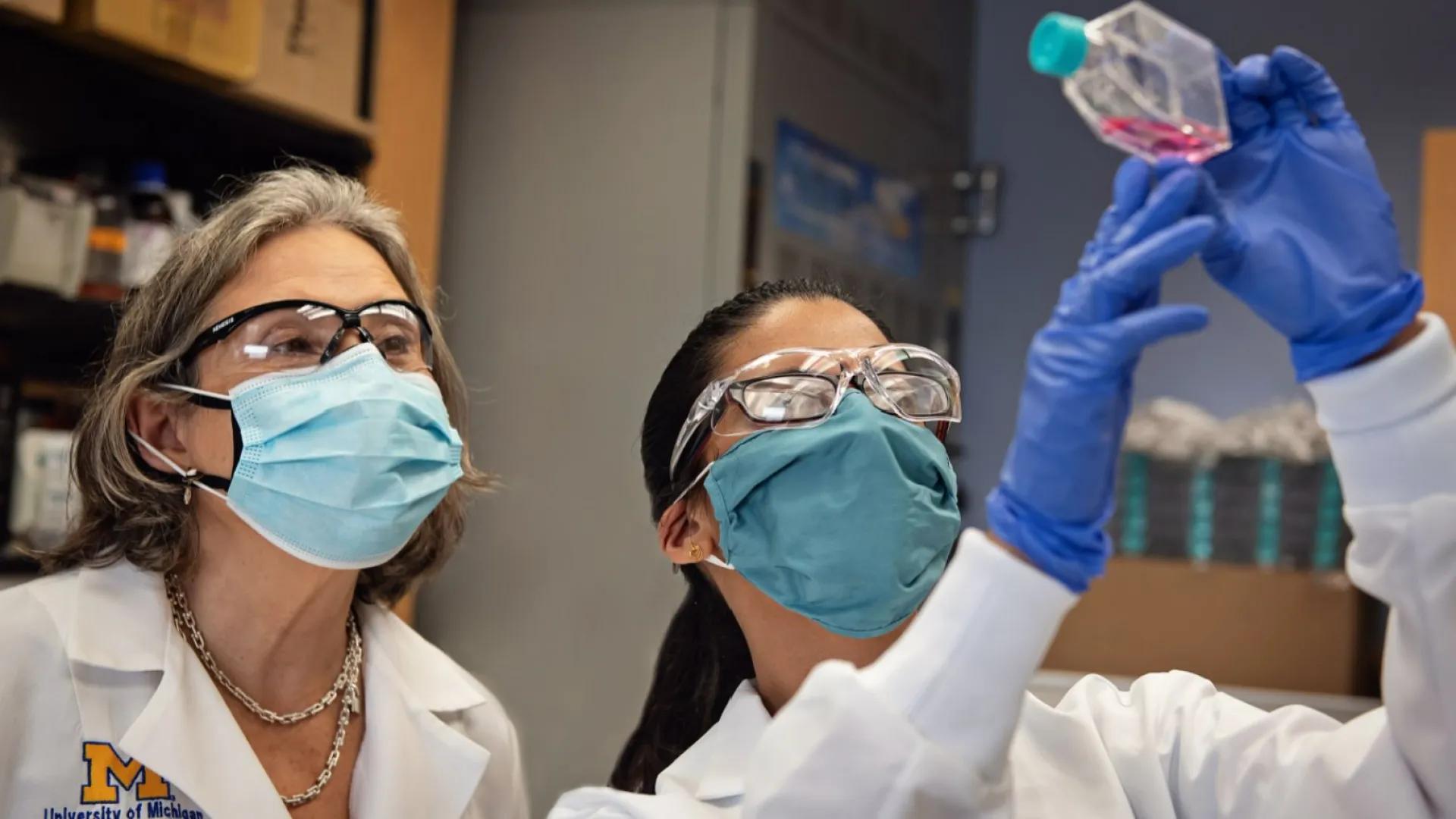
Researchers examine a specimen in the Merajver Lab

By the Numbers in FY2024

$260M
Million in Research Funding
4,089
Peer-Reviewed Articles Published

Giving to Internal Medicine

Your gift can help our physicians provide the highest-quality care while contributing to major advances in patient care, research, and education.

Make a gift

Featured News & Stories

See all news
Photo of U of M Hospital with the 2026-27 US News & World Report badge
Department News

7 Internal Medicine Specialties Nationally Recognized in USNWR Rankings

The Department of Internal Medicine was recognized in seven specialties in the 2026-27 U.S. News & World Report Best Hospitals rankings.
prescription pad blue yellow sketch
Health Lab

Social, financial barriers linked to reduced treatment for dangerous blood clots

People who experience social and financial challenges are less likely to receive certain anticoagulant prescriptions for potentially deadly blood clots, according to a study.
Computer image of a blue DNA strand and red chromosomes on a black background
Health Lab

Mutations attracted to the X chromosome amplify disease risk

Researchers have discovered that the human X chromosome attracts an unusual kind of DNA mutation, potentially doubling the associated risk of certain genetic disorders, including haemophilia and muscular dystrophy.
Lupus conference
Department News

2026 Lupus Conference

An educational program for Lupus warriors and their caregivers.
nicotine packets close up in container
Health Lab

Lung health expert weighs in on Zyn and other nicotine pouches

Michigan Medicine’s MeiLan Han, M.D., provides her professional and medical thoughts on the use of nicotine pouches.
Ibtissam Gad performs a demo of her hand model with an HPE Connect '26 attendee.
Department News

Helping Hands: Ibtissam Gad Is Rethinking How Clinicians Learn to Feel Disease

For most physicians, learning to recognize swollen joints begins in the classroom. Students study anatomy, learn examination techniques, observe experienced clinicians, and gradually gain experience examining patients during medical school and residency. For Ibtissam Gad, MD, a clinical assistant professor in Michigan Medicine's Division of Rheumatology, one limitation stood out. Learners often had relatively few opportunities to practice distinguishing subtle swelling by touch, and asking patients whose joints were already painful to undergo repeated examinations wasn't ideal for anyone involved.