-
Allergy & Clinical Immunology -
Cardiovascular Medicine -
Gastroenterology & Hepatology -
General Medicine -
Genetic Medicine -
Geriatric & Palliative Medicine -
Hematology & Oncology -
Hospital Medicine -
Infectious Diseases -
Metabolism, Endocrinology & Diabetes -
Nephrology -
Pulmonary & Critical Care Medicine -
Rheumatology

General Medicine Research
The U-M Medical School Department of Internal Medicine's Division of General Medicine is home to faculty with innovative and diverse research interests. We study how the health system works, how to improve healthcare delivery so that everyone can get patient-centered, high-quality care, and how to advance the health of our communities and the nation, including areas such as:
- delivery of healthcare
- healthcare outcomes
- cost of healthcare and pharmaceuticals
- care of the disadvantaged and other vulnerable populations
- history of medicine
- special issues in the care of patients with multiple diseases
For More Information
Research Highlights
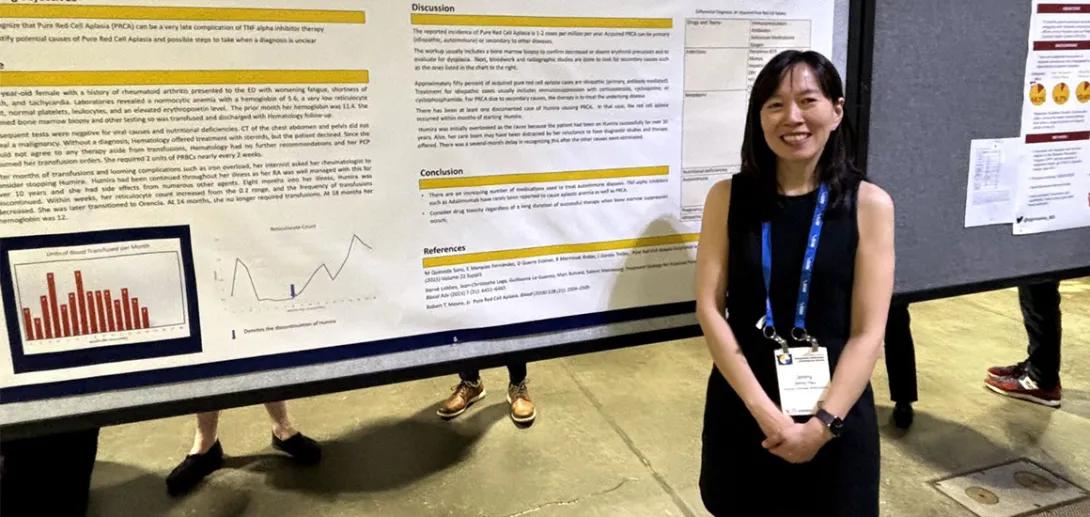
Our faculty are leading innovative research to address some of the biggest challenges in general internal medicine. Their work spans a wide range of topics, from improving health equity and access to care, chronic disease management, preventative care, healthcare delivery and more.
Explore some of the impactful work that has been done and how it's driving meaningful change in general medicine and beyond.

Deborah A. Levine, MD, MPH, is a professor of internal medicine in the Division of General Medicine. Her research focuses on stroke and dementia prevention and quality of care for people suffering from these conditions.
Dr. Levine and her team are examining the cognitive outcomes after stroke, and other vascular events such as heart attack or heart failure, seeking to understand the predictors and long-term trajectory of cognitive decline after one of them occurs. Her work also uncovers the barriers to access in stroke care and recovery, including access to adequate rehabilitation treatments, cognitive rehabilitation speech therapy, insurance, and medications - despite the known significant reduction in risk with these measures.
In addition, Dr. Levine and her colleagues are exploring how glucose levels from young to late adulthood are influencing the risk of dementia, especially in the era of the obesity epidemic. She is also investigating how heart attacks contribute to cognitive decline, diving deeper into the understanding of the increased risk of cognitive decline among heart attack survivors. Her research has shown that older adults with mild cognitive impairment are half as likely to receive cardiac catheterization and coronary artery revascularization after a heart attack compared to older adults with normal cognition, and she is working on identifying the reasoning.
Using a variety of methods, including pooling, harmonizing, and analyzing existing data from studies over years, along with repeated exams and tests, Dr. Levine aims to find out what matters most to these patients and their clinicians, and how decisions are made about their care.
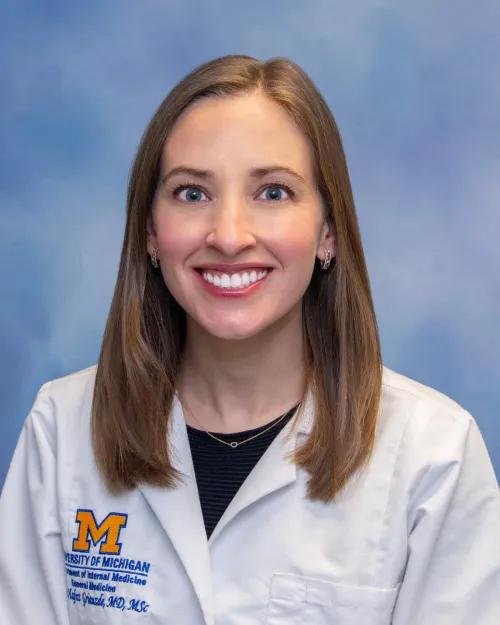
Dina Hafez Griauzde, MD, MSc, Dipl ABOM, is an assistant professor of internal medicine in the Division of General Medicine, and a research scientist at the Center for Clinical Management Research, VA Ann Arbor Healthcare System. Her research focuses on designing, testing, and scaling innovative primary care-based interventions for obesity and type 2 diabetes management.
To address the common issues that clinicians face with obesity management, such as lack of training and the limited time they have to meaningfully engage patients around weight, Dr. Griauzde and her colleagues have developed a novel intervention, called the Michigan Medicine Weight Navigation Program (WNP). The program consists of a 60-minute weight-focused visit with obesity medicine-trained physicians following a normal primary care visit. It aims to integrate obesity care into the primary care setting, helping patients understand their treatment options, associated costs, and pathways to specialized care.
Despite the availability of obesity treatments, including lifestyle change programs, pharmacotherapy and bariatric surgery, all have been underused. Now, the historic under-treatment of obesity has allowed for over-treatment with injectable weight loss medications, leading to an accelerated prescribing pattern, which may be unnecessary for many patients. Dr. Griauzde's broader vision for chronic disease management focuses on treating obesity to improve or resolve related conditions like diabetes and hypertension. Her goal is to scale these interventions and demonstrate their effectiveness through large clinical trials, while seeking institutional support for continued development of these programs.
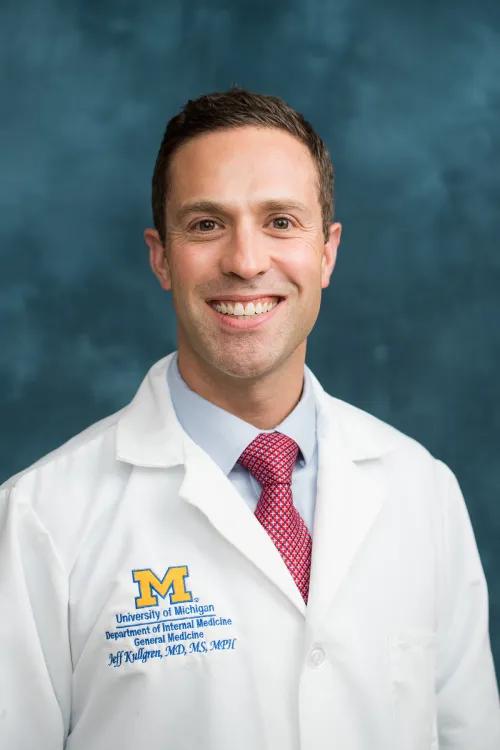
Jeffrey Kullgren, MD, MS, MPH, is vice chief for research and innovation for the Division of General Medicine. He also practices outpatient and inpatient general internal medicine at the VA Ann Arbor Healthcare System, where he serves as a research scientist in the Center for Clinical Management Research.
Dr. Kullgren’s research aims to help patients and clinicians make sound decisions that will improve the value of healthcare delivery. His work is focused on identifying opportunities to improve patient and clinician decision-making and developing and testing novel interventions and programs that can lead to improvements in those decisions and increase the value of healthcare.
Utilizing data collected from the National Poll on Healthy Aging (NPHA), a signature initiative of the U-M Institute for Healthcare Policy & Innovation (IHPI), Dr. Kullgren and his colleagues are studying the critical challenges facing older adults, including the major issue of loneliness. Recently there has been a growing focus on the health impacts of loneliness in the U.S., particularly in older adults, and there is an urge for policymakers, advocates, clinicians, caregivers, and older adults themselves to come together on solutions. The NPHA also focuses on the impact the COVID-19 pandemic has had on loneliness in older adults. Dr. Kullgren and his team have tracked loneliness over a large span of time and have noticed while there has been some improvement, the loneliness issue in older adults has returned to high, pre-pandemic levels.
NPHA research has also revealed the connection between working and health among older adults. While working can become more difficult for adults as they age and experience more health issues, there are unique benefits such as social connection and sense of purpose. Dr. Kullgren has been working on gaining more attention around this topic in the media and with policymakers.

Renuka Tipirneni, MD, MSc, FACP, is an associate professor of internal medicine, associate professor of health management and policy, and a physician-investigator in the Division of General Medicine. Her research focuses on the impact of health insurance policies and health care delivery programs on vulnerable populations, with a particular emphasis on Medicaid and Medicare, specifically Medicare Advantage. She aims to improve access, quality, affordability and equity of care, while addressing broader social determinants of health such as food insecurity, housing instability, and transportation. In a further effort to address these issues, she serves as program director of a collaborative quality initiative funded by Blue Cross Blue Shield of Michigan to improve health care for Michigan's communities.
Dr. Tipirneni is also principal investigator of two large grants from the National Institute on Aging focused on improving Medicare and Medicaid policies for older adults. As part of a larger team founded by the U-M Institute for Healthcare Policy & Innovation (IHPI), much of her research on Michigan’s Medicaid program involves surveying and interviewing Medicaid enrollees about their experiences and outcomes. Dr. Tipirneni and the IHPI team are looking at how Medicaid policies are communicated with enrollees and how enrollees navigate certain features to access their healthcare. Their insights have led to significant improvements in communication and navigation.
Some of the challenges Dr. Tipirneni experiences in her work are around Medicare Advantage, the trade-offs in affordability and choice, and how it translates to quality of care. For example, some of this research is focused on individuals with chronic health conditions, and whether they are getting similar rates of preventive care or the types of care needed to manage their chronic health conditions. As debates continue around Medicaid funding and work requirements, she remains committed to using research to inform policy decisions that support equitable and accessible healthcare benefits for all.
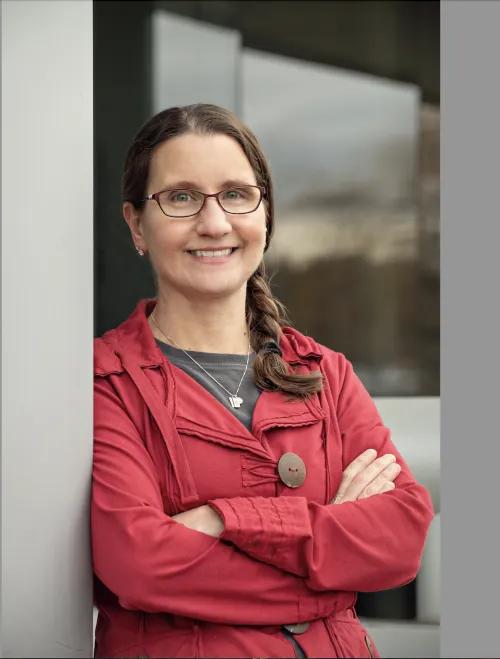
Sarah Hawley, PhD, MPH, is a professor of internal medicine in the Division of General Medicine, and a health services researcher focused on evaluating and improving patient-centered cancer care across the continuum. The majority of her work focuses on patient-provider communication and shared decision-making related to cancer prevention and control. Dr. Hawley is also a member of the Cancer Surveillance and Outcomes Research team, an interdisciplinary national team of cancer care delivery researchers that conducts both observational and interventional research.
Dr. Hawley's mission at Michigan Medicine is to continue to do work in cancer care delivery outcomes research and partner with colleagues who are leveraging national cancer registries to survey thousands of patients with cancer. She is especially interested in understanding and improving patient-provider communication and shared decision-making related to breast cancer treatment among vulnerable and underserved populations. Her work aims to understand why such populations face barriers to high-quality care, and to improve decision-making through tailored patient-facing and clinician-facing interventions.
Patients who are newly diagnosed with curable breast cancer face a complicated treatment decision-making process that can be overwhelming. Dr. Hawley and her team have found that gaps in patient understanding resulting from variations in care access, literacy and geographic location, can negatively impact the decision-making process, and that these knowledge gaps can be addressed by providing women with better information before they undergo something like potentially extensive surgery.
In 2013, Dr. Hawley and her colleagues developed iCanDecide, a tailored, interactive online breast cancer treatment decision tool. The iCanDecide tool allows patients to navigate through their entire treatment plan in one central place — from screening through treatment and survivorship. Providing an accessible, culturally appropriate and multilingual tool that is easily accessible and were major drivers of its development.
Research Centers & Programs
Many of our faculty members conduct research and hold leadership roles in a number of research centers and programs at Michigan Medicine and the VA Ann Arbor Healthcare System.
The Cancer Surveillance and Outcomes Research Team (CanSORT) is a multidisciplinary group of investigators based at Michigan Medicine and the VA Center for Clinical Management Research representing the fields of internal medicine, surgery, radiation, oncology, nursing, behavioral science, health services research, biostatistics and epidemiology. Our investigators are located at five universities and cancer centers throughout the United States.
CanSORT studies the quality of cancer care across the continuum of care from prevention to survivorship. The team also develops and evaluates interventions to improve cancer care including decision tools for patients and clinicians, and dissemination strategies to more quickly move research results to the provider community.
The Center for Health Communications Research (CHCR) is a dedicated team integrating behavioral science, technology and art to create and research health interventions that inspire informed health decisions, broaden access to health information and advance the field of health communications.
The Center for Value-Based Insurance Design (V-BID), is built on the principle of lowering or removing financial barriers to essential, high-value clinical services. V-BID plans align patients’ out-of-pocket costs, such as copayments, with the value of services. By reducing barriers to high-value treatments (through lower costs to patients) and discouraging low-value treatments (through higher costs to patients), these plans can achieve improved health outcomes at any level of health care expenditure.
The Cognitive Health Services Research Program conducts innovative research in cognitive impairment and dementia that informs health care policies, guides clinical decision making and improves the health and well-being of individuals.
PARADIGM is a signature program in the division that seeks to create opportunities to find long-term solutions for improving how primary care is organized and delivered to optimize healthcare value, clinician well-being and patient-centered outcomes. Clinical faculty will submit proposals for projects and work with a research faculty member, the PARADIGM project team and division leadership to implement projects in the clinical setting.
The VA Center for Clinical Management Research (CCMR) is a VA Health Services Research and Development Center of Innovation located in Ann Arbor, MI with over 60 investigators, 140+ staff members and annual extramural funding of over $20 million. The CCMR's vision is to improve the quality, effectiveness, safety and efficiency of Veterans’ healthcare through research and partnerships that are driven by important challenges in clinical management.
Our Faculty
In FY25, our 34 research faculty members had 263 publications and received 36 federal grants.
- Sumit Agarwal, MD, PhD, MPH
- Lawrence An, MD
- John Ayanian, MD, MPP
- Nora Becker, MD, PhD
- Steven Bernstein, MD, MPH
- Alexander Chaitoff, MD, MPH
- HwaJung Choi, PhD
- A. Mark Fendrick, MD
- Susan Goold, MD, MHSA, MA, FACP
- Dina Griauzde, MD, MSc
- Sarah Hawley, PhD, MPH
- Rodney Hayward, MD
- Michele Heisler, MD, MPA
- James Henderson, PhD
- Timothy Hofer, MD, MSc
- Joel Howell, MD, PhD
- Bradley Iott, PhD, MPH, MS
- Cornelius James, MD
- Steven Katz, MD, MPH
- Eve Kerr, MD, MPH, MACP
- Catherine Kim, MD, MPH
- Sarah Krein, PhD, RN
- Jeffrey Kullgren, MD, MS, MPH
- Pooja Lagisetty, MD, MSc
- Kenneth Langa, MD, PhD
- Deborah Levine, MD, MPH
- Rajesh Mangrulkar, MD
- Adam Markovitz, MD, PhD
- Laurence McMahon Jr., MD, MPH
- Jennifer Meddings, MD, MSc, FACP, FAAP
- Archana Radhakrishnan, MD, MHS
- Jeremy Sussman, MD, MSc
- Renuka Tipirneni, MD, MSc
- Sandeep Vijan, MD, MS
- Lauren Wallner, PhD, MPH
- Brent Williams, MD, MPH
Hear from our Faculty
My career path as a generalist provided me the opportunity to pursue multiple, diverse research areas and practice medicine across the entire spectrum of clinical care. This flexibility enabled me to work closely with colleagues from several medical and nonmedical disciplines who contributed significantly to my personal and professional growth.

Featured Research Articles

Top 7 tips for choosing Medicare prescription drug coverage for 2027

Many older adults make Medicare decisions quickly and most don’t change plans, poll finds

Improving the clinical experience through data and better EHR workflows
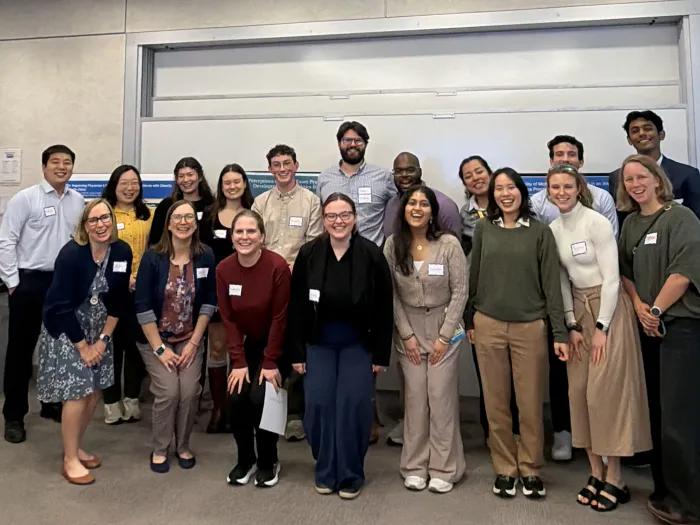
Primary C.A.R.E. Summer Team Immersion Program Launches

Dr. Cornelius James and his team develop Physician Readiness Report for AI in Clinical Practice