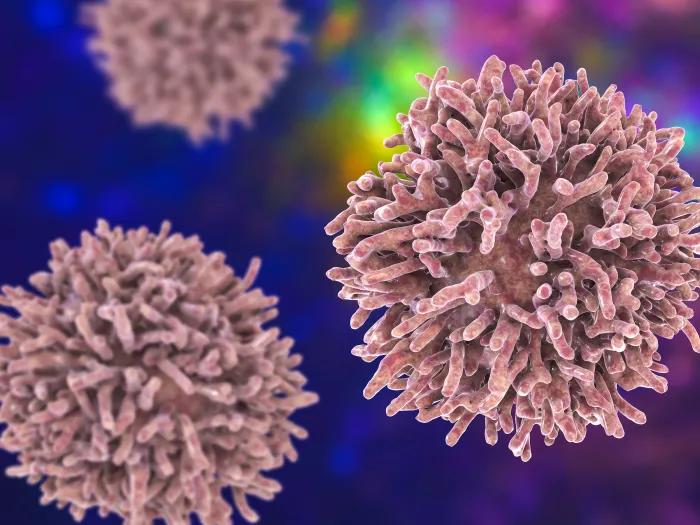
Metabolism, Endocrinology & Diabetes: Thyroid Disease Research
The Division of Metabolism, Endocrinology, and Diabetes plays a leading role in advancing our understanding of thyroid diseases by conducting cutting-edge research that spans patient-centered topics ranging from diagnosis to treatment to survivorship.
Our research in this field not only enhances our understanding of thyroid disorders, but also leads to more effective treatments, earlier diagnoses and better management strategies for patients.
For More Information
Thyroid Research Overview
The thyroid, a small, butterfly-shaped gland in the front of your neck, plays a pivotal role in regulating metabolism, growth and energy production by producing thyroid hormones. These hormones influence nearly every organ system in the body, making our basic science research on thyroid function and hormonal regulation essential for improving the management of a wide range of disorders. In addition, approximately half of the population will develop thyroid nodules, and about 10% of these nodules are diagnosed as thyroid cancer. Our clinical research is driven by patient experiences and aims to enhance the management of both thyroid nodules and thyroid cancer through high-quality, patient-centered research.
Our basic science and clinical research is well supported by the National Institutes of Health (NIH). In FY2024 alone, we received over $4.1 million in research funding, enabling us to continue our work in advancing scientific discovery, improving clinical outcomes and offering more effective, personalized patient care.
Basic Science Thyroid Disease Research
Basic science thyroid research in the division focuses on the study of thyroid epithelial cells, which are responsible for producing thyroid hormones. These cells use thyroglobulin as a precursor that undergoes iodination (the process of adding iodine) in order to synthesize thyroid hormones.
Our research is specifically interested in studying the protein interactions that take place during this process, particularly those that occur within the secretory pathway. The secretory pathway involves several key cellular structures:
- Endoplasmic reticulum
- Golgi complex
- Secretory vesicles
- Endosome-lysosome-autophagosome system
By investigating how proteins interact within these structures, our research aims to understand how the secretory pathway optimizes the production of thyroid hormones, which are derived from polypeptides like thyroglobulin. This research is important for understanding thyroid function and potential disorders related to thyroid hormone production.
To learn more about our basic science thyroid research, visit Dr. Peter Arvan’s lab site
Clinical Thyroid Disease Research
Clinical thyroid research in the Division of Metabolism, Endocrinology, and Diabetes is deeply rooted in collaboration, bringing together multidisciplinary teams of experts from diverse fields such as endocrinology, oncology, surgery, geriatrics, primary care, biostatistics, health economics, epidemiology, and survey methodology.
Our clinical research is divided into two types of research - health services research and clinical trials research. Our studies are broad and multifaceted, addressing various aspects of thyroid disease management, from early detection and prevention to treatment optimization and long-term care.
The thyroid health services research team, led by Megan Haymart, MD, focuses on research topics across the thyroid and thyroid cancer continuum, with the goal of improving clinical outcomes and reducing patient harm. Our multidisciplinary team conducts research studies that involve large cancer registries, survey studies and other population-based studies, and behavioral interventions design.
Our thyroid clinical trials research team, led by Francis (Frank) Worden, MD, conducts a wide range of clinical trials that evaluate the safety, effectiveness, and potential benefits of new treatments, therapies, and diagnostic methods for thyroid cancer.
Key Clinical Research Areas
- Intervention, treatment, and management approaches to improve quality of care and patient outcomes
- Increased incidence of thyroid cancer and its implications
- Thyroid cancer survivorship
- Thyroid hormones in older adults and their effect on aging, cognitive function, and overall health
- Thyroid disease and its effects on other organ systems
- Imaging and diagnostic technology to identify and treat thyroid disease
- Role of physicians, patients, and caregivers in treatment decisions
- Communication between physicians and patients
- Variation in thyroid disease management among patient populations and access to thyroid care
To learn more about our clinical thyroid research, visit Michigan Medicine ThyCARE
MEND Thyroid Disease Research Faculty

Peter Arvan

Debbie W Chen, MD
Nazanene H Esfandiari, MD

Megan R Haymart, MD

Maria Papaleontiou, MD
Sophia Hemmrich Sinha, MD
Featured News & Stories

ThyCARE Team Receives Inaugural AACE Endocrine Care Innovation Award
Accessibility issues in cancer care