
Pulmonary & Critical Care Medicine Fellowship Clinical Training
Senior fellows in the U-M Medical School Department of Internal Medicine's Pulmonary & Critical Care Medicine Fellowship have the opportunity to tailor their training experience by pursuing either clinical or research tracks, according to their evolving career interests.
Our program is committed to supporting fellows through this decision-making process and beyond. We recognize that while some fellows may already have a clear career path in mind, others may still be exploring their options.
We prioritize flexibility and individualized mentorship to support each fellow’s unique goals as they take shape.
For More Information
Unique Training Experience
The first year of the U-M Medical School Department of Internal Medicine's Pulmonary & Critical Care Medicine Fellowship is primarily a clinical year during which fellows gain experience in a wide variety of inpatient and outpatient settings at the University Hospital and the VA Medical Center. Fellows will maintain a continuity clinic throughout the 3 years of fellowship training. During the first year, this is structured in a X+Y format, with continuity and subspecialty clinic weeks occurring roughly every 4-6 weeks.
Fellows will advance their knowledge and skills while rotating through additional clinical services (including trauma-burn, surgical, cardiovascular, neurological intensive care units) and specialty clinics in their second and third years of training. Senior fellows can tailor their experience to focus on a clinical or research track with guidance and mentorship from our expert team of faculty.
Year 1
The primary focus of the first year of fellowship training is mastery of clinical skill in inpatient and outpatient settings.
Emphasis is placed on developing:
- Understanding of basic mechanisms and pathophysiology of respiratory disease and critical illness
- Ability to efficiently formulate clinical assessments and therapeutic plans
- Ability to critically analyze the relevant medical literature
- Skills in teaching medical students and house staff
The first-year fellow spends the year rotating among eight different services at the University Hospital and the VA Medical Center.
Core Clinical Rotations
The consult fellow evaluates patients with pulmonary disease directly or supervises students and house staff in consultations throughout the University Hospital. After initial evaluation, all patients are discussed in detail with a member of the attending staff.
This service is responsible for all patients under the care of the Department of Internal Medicine who require critical care and are not candidates for the Cardiovascular Intensive Care Unit. In this 20-bed unit located on 6D, care is provided by two teams, each consisting of a divisional faculty member and fellow, four house officers and fourth year medical students. The Critical Care Medicine Unit attendings and fellows, alongside critical care certified Advanced Practice Providers, also provide care for up to 5 additional critically-ill patients admitted to the 8D unit. The attending physician leads both patient care rounds and didactic teaching rounds daily with house staff and fellows.
In addition to their clinical supervisory role, the fellow is also responsible for performing and/or supervising invasive procedures in the unit, including bronchoscopy, endotracheal intubation, thoracostomy placement, etc. The two fellows on CCMU service share call responsibilities during the day, providing pulmonary and critical care consultative services for acutely ill patients in the University Hospital system, and assisting house staff with the evaluations of newly admitted patients as well as those already on the CCMU service.
The fellow will explore all aspects of lung transplantation from outpatient evaluation and management, listing, in-patient care of pre- and post- transplanted patients.
This state-of-the-art facility is utilized for endoscopic procedures performed by the Pulmonary & Critical Care Medicine Division, as well as the Gastroenterology and Hepatology Division. The facility includes preoperative preparation, video endoscopy and fluoroscopy facilities, and recovery room facilities.
Bronchoscopy with and including endobronchial ultrasound guided needle aspiration (EBUS), electromagnetic navigational bronchoscopy, transbronchial biopsy, other interventional bronchoscopic procedures (airway dilation, stent placement, endoscopic LVRS, etc), thoracentesis, and non-tunneled and tunneled chest tube placements may be performed during the Procedure Service rotation.
The fellow gains extensive experience with the indications for, performance and interpretation of clinical and physiologic studies. These include spirometry, (basic and advanced testing) arterial blood gas studies, respiratory muscle function studies, measurement of bronchial reactivity, and sophisticated cardiopulmonary exercise testing. Additionally, the fellow will participate in patient education and evaluation of patients in our Pulmonary Rehabilitation Program
Two fellows are assigned to the Ann Arbor VA Medical Center, one in the ICU and the other on the Pulmonary Medicine Consultation Service. Both fellows evaluate patients directly and/or supervise house staff and/or students on either clinical service.
The ICU fellow participates in the management of critically ill medical and surgical patients with a dedicated ICU team (one medical and one surgical). The Pulmonary Medicine fellow cares for patients with pulmonary disease admitted to inpatient services and patients presenting to the outpatient Interventional Pulmonary Clinic, performs all bronchoscopies (including interventional bronchoscopic procedures) and tube thoracostomy placements, and reads pulmonary function tests.
This service is responsible for management of intensive care patients and pulmonary consultations (see description above) from 7:00PM to 7:00AM.
First-year fellows attend general pulmonary outpatient clinics and subspecialty clinics at both the University and the VA Medical Center in an X+Y format: clinic weeks during the first year occur approximately every 4-6 weeks with inpatient rotations in between. Thereafter and throughout the remainder of fellowship, fellows will each maintain their own weekly general pulmonary continuity clinic.
Fellows will receive exposure to the medical and surgical management of complex pleural and thoracic disease at the University Hospital and the VA Medical Center.
Year 2
During the second year of fellowship, trainees participate in scholarly activity and research while continuing to refine their skills on core clinical rotations. Second year fellows will also receive further exposure to the care of non-medical ICU patients admitted to the Surgical ICU, Neurological ICU, Trauma-Burn ICU and to Pulmonary Subspecialty care services.
Year 3
The primary focus of the third year is the development of the skills and experience that serve to advance fellows down their chosen career path. For fellows bound for clinical careers, further exposure to relevant clinical rotations will be prioritized; for research-bound trainees, time will be protected for scholarly activity and/or supplemental classroom activity necessary for a successful research career.
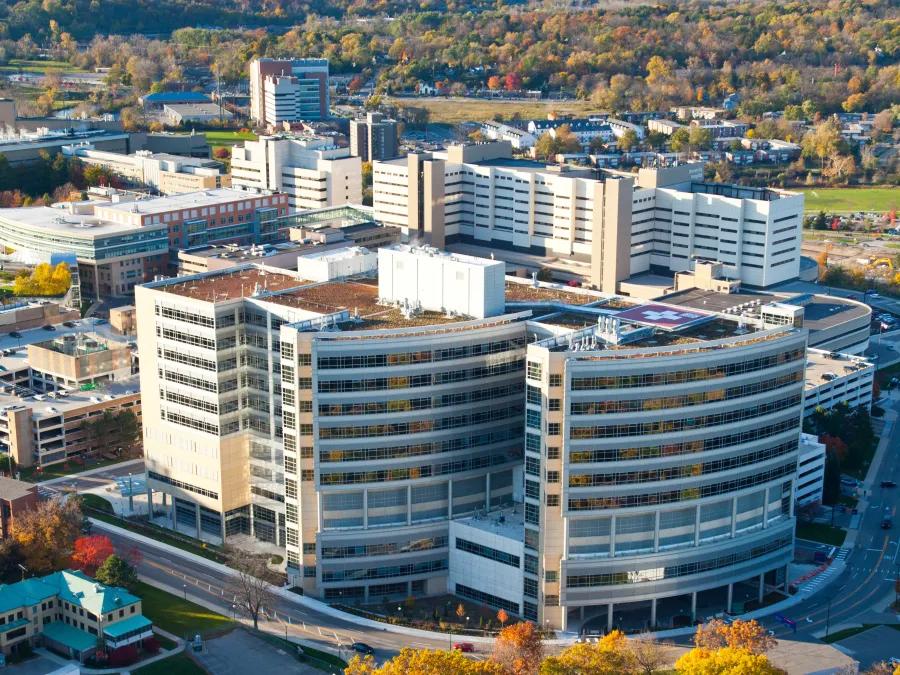
See Where Training Takes Place
Expand your career trajectory in a high-volume academic medical center that also supports and excels in a wide range of basic science, translational and clinical research programs.
