About Psychiatry

A group of people standing on a set of stairs after attending a conference for the Department of Psychiatry

Advancing Mental Health

Pioneering mental health advancements through compassion, science and care.

The U-M Medical School Department of Psychiatry offers both inpatient and outpatient clinical services, delivered by a multidisciplinary team dedicated to expert care during critical times of psychiatric need. Our mission is to advance mental and behavioral health through compassionate care, innovative research and transformative education. By seamlessly integrating research, clinical care and education, we strive to lead advancements in the field and promote well-being for individuals, families and communities. Our core values of compassion, equity, excellence, integrity and teamwork guide all that we do.

At the end of the 19th century, mental health care in America was primarily custodial. Individuals with psychiatric conditions such as schizophrenia, alcoholism and depression were grouped together with those who had neurological or developmental disorders and scientific approaches to treatment were rare. While innovations like Thomas Kirkbride’s asylum architecture improved living conditions, true understanding and effective treatment were lacking.

Today, we are committed to evidence-based, patient-centered care that recognizes the complexities of mental and behavioral health. Our approach combines cutting-edge research, outstanding clinical services and collaborative education to ensure that every patient receives compassionate, individualized treatment. We focus on both the science and humanity of care, working to improve outcomes and quality of life for all those we serve.

Explore the latest editions of PULSE, the Department of Psychiatry’s e-newsletter:

PULSE Newsletter

The PULSE offers a snapshot of the incredible work our experts and their teams are engaged in. We share research highlights, educational webinars, event information, profiles of faculty members, as well as patient and supporter stories.

Sign up for the PULSE

Alumni

Stay connected through events and support our ongoing leadership in mental health care, research and education.

Faculty Recruitment

See current open positions for our careers advancing mental health through research, accessible care and exceptional training.

Lectureships

Explore our annual endowed lectures that honor pioneers and inspire continued excellence.

Webinars & Podcasts

We regularly host mental health podcasts in addition to educational webinars and community events.

Giving

Giving supports innovative care, research and training that improves access, advances treatment and transforms lives in mental health.

People

A broad spectrum of experts guides our clinical, research and educational programs on the path to excellence.

Our History

First state psychopathic hospital opened
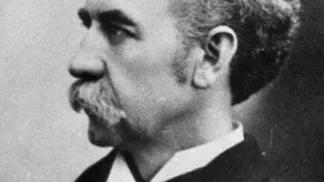
In the late 1890s, Professor William J. Herdman led efforts to establish a psychopathic hospital at U-M. His vision resulted in the 1906 opening of one of the nation's first hospitals focused on mental illness diagnosis and research.
Herdman Herdman
Early Innovation in Psychiatric Care at Michigan
Michigan pioneers used advanced tools and research to explore brain function and genetics in mental illness. Dr. Albert Barrett standardized patient evaluations, seeking scientific understanding and preserving patient dignity.
Barrett Barrett
Dr. Raymond Waggoner and the Rise of Modern Psychiatry at Michigan
Dr. Raymond Waggoner fostered expansion and innovation, blending scientific and compassionate care. He united medical and psychiatric treatment, paving the way for the biopsychosocial model still central to psychiatry today.
Waggoner Waggoner
Dr. Albert Silverman Leads Michigan Toward Biological Psychiatry
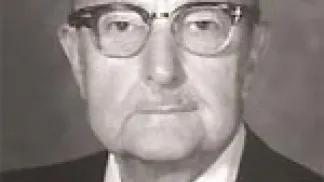
As chair from 1970-81, Dr. Albert Silverman advanced Michigan’s focus on biological psychiatry, recruiting top researchers and furthering the department’s national leadership beyond its strong psychoanalytic roots.
Silverman Silverman
Dr. John Greden’s Legacy: Advancing Depression Care and Reducing Stigma
As chair from 1985-2007, Dr. John Greden advanced neuroscience, reduced stigma, and founded the world’s first Depression Center, positioning Michigan as a national leader in depression research, treatment, and outreach.
John Greden
grenden grenden
Gregory Dalack, M.D.: Leadership Focused on Complex Psychiatric Care
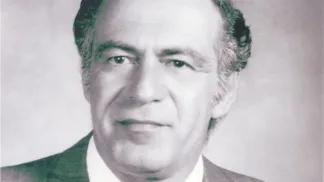
Appointed chair in 2010, Dr. Dalack has led research on schizophrenia, nicotine addiction, and metabolic effects of antipsychotics, while prioritizing patient connection and education for trainees and future psychiatrists.
Gregory Dalack
Dalack Dalack
Stephan F. Taylor, M.D., Becomes Chair
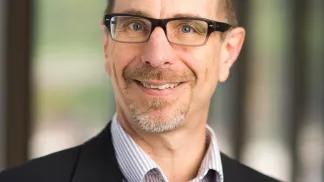
On September 1, 2025, Dr. Stephan Taylor was appointed Chair of the Department of Psychiatry and the Daniel E. Offutt, III Professor of Psychiatry in the Medical School. Dr. Taylor’s research uses brain imaging, brain stimulation, and behavioral techniques to study and improve treatment for psychosis, obsessive-compulsive disorder and mood disorders.
Stephan F. Taylor
Stephan F. Taylor Stephan F. Taylor