
Forensic Psychiatry Fellowship
The Forensic Psychiatry Fellowship at the U-M Medical School Department of Psychiatry is one of the oldest, most established fellowships of its kind in the country. Over the years, its faculty have included national leaders in forensic psychiatry, forensic psychology, public psychiatry and the interface between mental health and the law.
The Forensic Psychiatry Fellowship is a one-year, post-residency training program for psychiatrists planning careers in forensic or correctional psychiatry. It is accredited by the Accreditation Council for Graduate Medical Education. Board certified general psychiatrists in good standing who complete this program are qualified to sit for the subspecialty examination in forensic psychiatry offered by the American Board of Psychiatry and Neurology.
For More Information
Program Overview
Serving as the fellowship’s main rotation site, the Center for Forensic Psychiatry (CFP) provides diagnostic outpatient and inpatient evaluation and inpatient treatment of individuals committed to the Michigan Department of Health & Human Services by the criminal courts. Since its inception in 1974, CFP has been one of the nation’s premier training sites for professionals in psychiatry, psychology and social work specializing in the interface between mental health and the law.
The fellowship program consists of rotations and experiences involving criminal evaluations, civil evaluations, risk assessments pertaining to release decisions for insanity acquittees, violence risk assessments, restoration of competency to stand trial, courtroom testimony and forensic consultation to general psychiatrists. Fellows work with the State Medical Director for Behavioral Health and Forensic Programs to learn about psychiatric administration, public policy and statutory development.
Exposure to correctional psychiatry, police training, specialty courts and other alternatives to incarceration programs are among the opportunities available. Fellows interested in the intersection of child psychiatry and the law may be involved with case consultations related to juvenile justice programs and child welfare.
How to Apply
The Forensic Psychiatry Fellowship program utilizes the Electronic Residency Application Service (ERAS) and the National Residency Matching Service (NRMP Match).
For more information about the application process, please visit the ERAS website and the NRMP Match.
Curriculum & Clinical Rotations
The Forensic Psychiatry Fellowship program consists of 12 months of clinical and didactic training, provided in partnership with the Center for Forensic Psychiatry. Training opportunities include:
- Clinical training at the Center for Forensic Psychiatry's Inpatient Treatment Units
- Clinical training at the Center for Forensic Psychiatry's Outpatient Evaluation Unit
- Clinical training at the Forensic Evaluation Service within the Program of Psychiatry, Law, and Ethics at Michigan Medicine
- Didactic training in Clinical Aspects of Forensic Psychiatry (Core Curriculum I)
- Didactic training in Landmark Cases and Legal Aspects of Forensic Psychiatry (Core Curriculum II)
In addition, fellows attend the “Law and Psychiatry at Criminal, Civil and Public Policy Crossroads” course taught by Dr. Debra Pinals at the U-M Law School. Trainees also meet regularly with select faculty at the law school throughout the year for individual instruction in an open forum style discussion.
Salary & Benefits
We offer highly competitive salaries and generous benefits to our fellows and advanced trainees. Trainee salary will be commensurate with that of a House Officer at an equivalent level of training based on the HOA contract.
Current Fellows
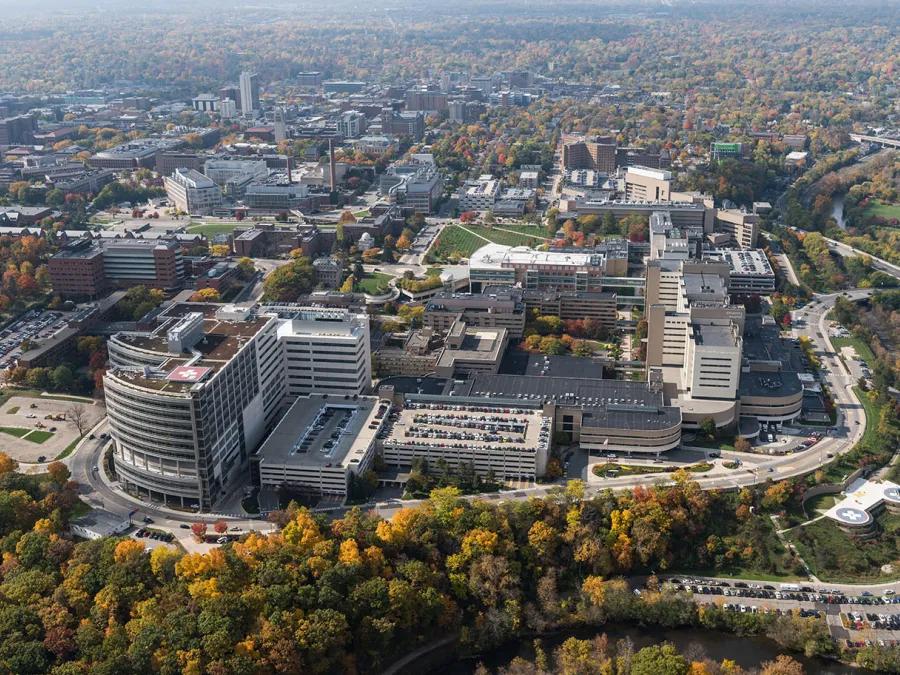
Meet our current trainees in Forensic Psychiatry. We emphasize teamwork, excellence, and leadership while preparing our fellows with resources to be successful in their careers.
Program Leadership
Kathleen Letty Kruse, MD
Program Director and Medical Director of Nyman Unit
Medical School
Celia Williams
- Lisa Anacker, MD
- Elissa Benedek, MD
- Seher Chowhan, DO
- Hayley Getzen, MD
- Diane Heisel, MD
- Kristen Hellebust, MD
- Chase Hiller, MD
- Yuliang Hu, MD
- Edward Jouney, DO
- Kimberly Kulp-Osterland, DO
- Jessica Povlinski, MD
- Debra A. Pinals, MD
- Akhil Pola, MD
- Ernest Poortinga, MD
- Candyce Shields, PhD, ABPP
- Martha Smith, Psy.D, ABPP
- Derek Stodolak, MD
- Frank Vandervort, JD
- Kyle Webster, DO, PhD
- Jay Witherell, PhD

Life in Ann Arbor
We find a new reason to love Ann Arbor nearly every day — year-round outdoor activities, cultural experiences, a growing food scene, and a welcoming, family-friendly atmosphere are just a few that come to mind. Explore all that Ann Arbor and our surrounding communities have to offer.

Wellness
The health and well-being of our team is a priority for our department's culture. Through onsite wellness programs and services, we offer diverse resources designed to support both you and your family.
