
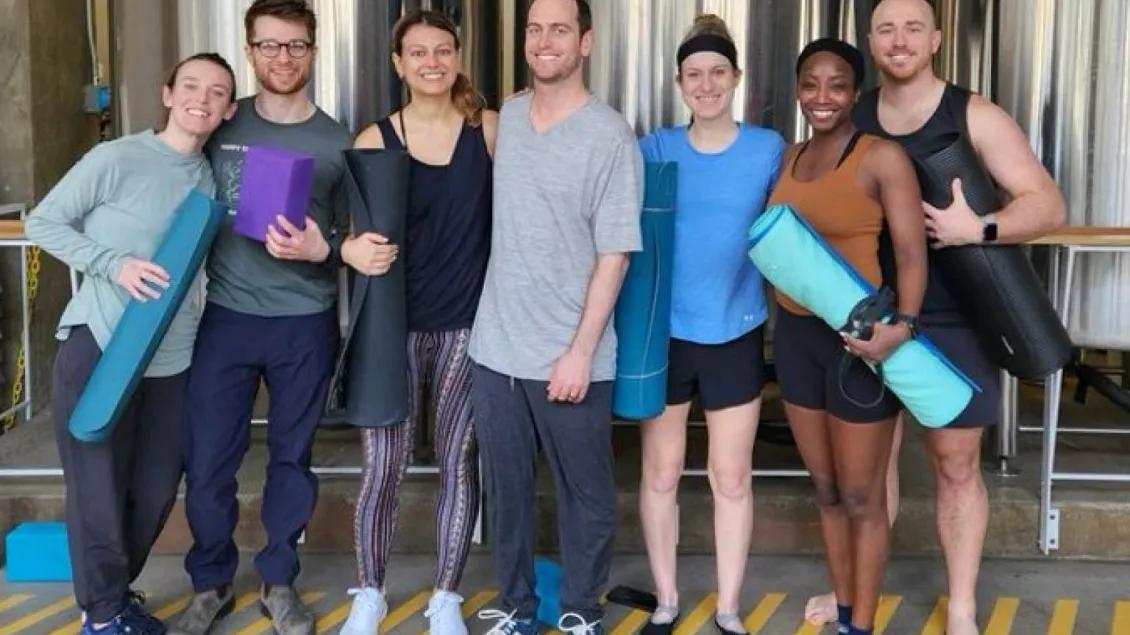
Psychiatry Resident Life
The General Psychiatry Residency program at the U-M Medical School Department of Psychiatry is a strong training program that prepares residents for independent practice in a variety of treatment settings: inpatient, outpatient, emergency, veterans’ care, pediatric, substance use, and forensics, to name a few.
Our team focuses on providing residents with unique training opportunities to develop their expertise in the field with an emphasis on fostering well-being with a wide array of resources to support wellness.
Learn more by jumping to the links below:
- A Message from the Chiefs
- A Day in the Life of a Psychiatry Resident
- Our Community
- Well-Being Programs & Resources
For More Information
Message from the Chiefs
The University of Michigan Psychiatry Residency Program is a comprehensive training program designed to prepare residents for excellent, independent practice in a variety of settings. Strong experiences specifically include emergency, child and adolescent, veterans' care, substance use, forensics, and more.
A contemporary psychiatrist understands an ever-widening range of content, subspecialties, and practice settings to provide care. This is a strength of our program, with a breadth in both subspecialty care and treatment settings. Though advocacy work has improved mental health awareness, stigma and gaps in access to evidence-based treatment persist. This reality requires thoughtful, charismatic advocates who can influence the future for the betterment of our patients and our profession. Our program provides an emphasis on leadership development, giving residents the tools to pursue their passions while balancing clinical work.
We are glad that we chose the University of Michigan for residency in these formative years. Here, we have found a balance of wellness and rigor, both supported and challenged by our mentors. We believe you will find the resources and connections for you to achieve your goals, whether that be academics, private practice, research, education, or advocacy. We hope that prospective candidates will consider joining the UM family! Go Blue!
Sincerely,
Kennedy, Katie, Ashta, and Nick

Residents out for a night of karaoke

Residents and attendings at the 2024 APA conference in New York City
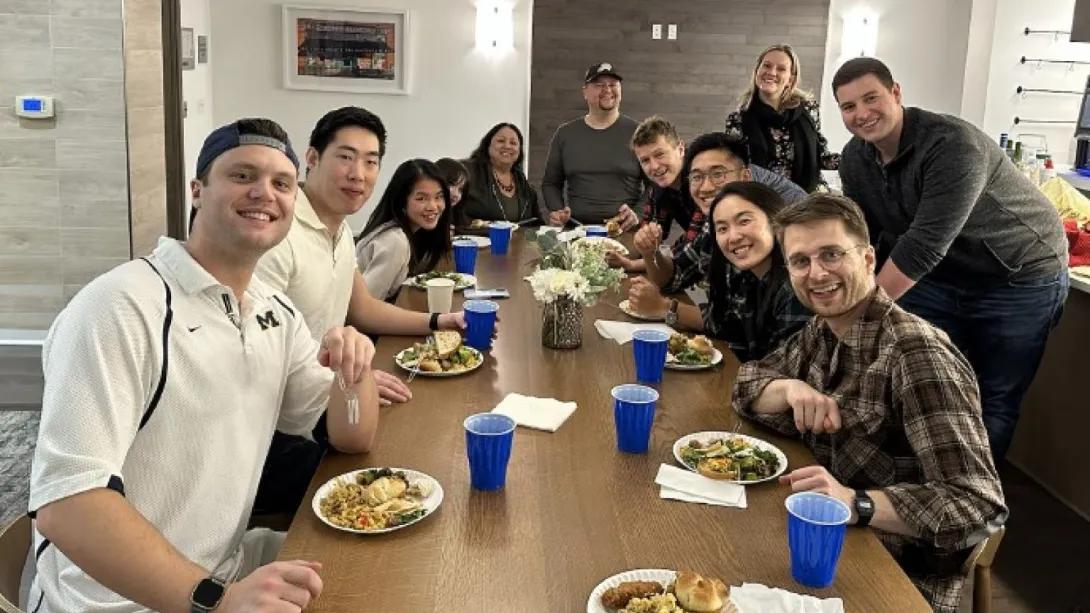
Residents and family celebrating Friendsgiving

Residents getting together for the December holidays
A Day in the Life of a Psychiatry Resident
Hear from our residents and get to know their daily routines in each year of the General Psychiatry Residency program. Learn more about the unique features that make our program and life in Ann Arbor a well-rounded training experience that balances work and well-being.
Hello and welcome everyone! My name is Aneesh and I’m one of the interns in the Psychiatry Program at U-M Medical School. We’re thrilled that you’re interested in our program! I’ll be sharing my perspective as someone new to the University, walking you through a day in the life of a PGY-1.
6:00 - 8:00 AM
The workday doesn’t officially start till 8:00 AM. However, if you’re a morning person, Ann Arbor offers a ton of green spaces and walkable areas to explore. Some of my favorites are Bird Hills Trail, Nichols Arboretum Loop Trail, and the Pinckney Recreation Area. This is also a great time to grab some local coffee (I highly recommend 19 Drips).
8:00 - 10:00 AM
I head to the resident workroom around 8:00 AM where I meet my amazing co-residents and medical students for sign out. I take some time to review charts and then start seeing my patients. As interns, we typically manage 4-5 patients, which has been a good balance. It allows for exposure to a variety of psychiatric presentations without feeling overwhelmed. Plus, there are several opportunities to teach, including supervising medical students during patient interviews.
Every Thursday morning, we have protected time for lectures. These alternate between formal didactics and Proskills sessions. In our formal didactics, we cover a range of topics from suicide risk assessments to psychopharmacology. Proskills is a process group where we also get early exposure to therapeutic techniques.
10:00 - 10:45 AM
Next, we log into our daily interdisciplinary team meeting. During these sessions, we review every patient and discuss the plan for the day. The team includes attending psychiatrists, residents, pharmacists, nurses, and social workers, creating a collaborative environment where each person contributes their unique perspective to further our patients’ care.
10:45 AM - 12:00 PM
After the meeting, we round with attendings to see patients and staff our cases. This is a fantastic opportunity to learn from experienced and approachable clinicians, gain insight into interviewing techniques, and develop treatment plans. It’s also a good time to grab some snacks from the resident room!
12:00 - 1:00 PM
Lunchtime! I usually head to the VA cafeteria and use meal stipends provided by the VA. This is also a great time to catch up with co-residents or do some teaching with our medical students. Today, we covered the mental status exam and antipsychotic medications.
1:00 - 3:30 PM
In the afternoon, we see patients in the emergency department and admit new ones. There’s a good balance between supervision and independence. We work closely with nursing staff to ensure both the physical and psychiatric needs of our patients are met. Around 3:30 we prepare for sign out, after which we complete our handoffs and head home. I find there’s plenty of time for activities to promote a healthy work-life balance, whether it’s book clubs, running clubs, or intense pickleball sessions. We’re also in the process of starting a psychiatry-themed movie club, so stay tuned! If nothing else is going on, I’ll grab dinner with my co-interns at one of the great local restaurants in Ann Arbor or Ypsilanti (shout out to La Torre Taqueria).
3:30 - 8:30 PM
One day a week I am on call in the evening, where I see patients in the Emergency Department presenting with psychiatric concerns. Over the past few weeks, I’ve become more comfortable triaging patients with a variety of presentations. Thankfully, I never feel alone when I need help – I’m always joined by a PGY-2 during these shifts. After call, I head home with a very short commute of 10 minutes. If it’s the last Friday of the month, I’ll join other residents for “Final Fridays” where we meet up for happy hour.
Hey everyone! I'm Kennedy, one of the current PGY-2s. The PGY-2 year is comprised of rotations on inpatient child, consult-liaison, adult inpatient (at both U-M and the VA), and Psychiatric Emergency Services (PES). Below is a typical day on my recent month on Consult-Liaison Psychiatry at the Main Hospital.
6:30 AM
I wake up to go work out. I pack a bag with my scrubs to change into after.
8:00 AM
I get to work and start chart reviewing my patients from the previous night. I also await an email from my attending with any new consults. I generally prep my notes for the day in the morning so that other teams can see the psychiatry first contact in case they need to reach out. This also saves time later in the day. During this time, I also touch base with my attendings to discuss which patients are pertinent to see that day. Sometimes, your attending might want to see certain patients together, depending on their workload and schedule.
9:30 AM
I start rounding on my patients, which includes communicating with nursing staff, primary teams, as well as any additional consulting teams.
11:00 AM
I touch base with my attendings again, letting them know any significant updates regarding the patient. During this time, I also touch base with primary teams and communicate any recommendations regarding safety, medication, or diagnostic testing/labs for given patients.
12:00 PM
Lunch! I usually bring lunch from home; however, when in a pinch, I will get lunch from the cafeteria. Sometimes, we have lectures or meetings during this time and lunch tends to be provided! This is always an exciting part of the day.
1:00 PM
We round in a large conference room as a team with our colleagues in social work, pharmacy, and psychology. These are always very productive meetings where we can all touch base collectively to ensure we are all on the same page regarding patient care.
2:00 PM
I might still need to staff a few patients or communicate some more recommendations to primary teams. It is around this time that I start to write my notes. I always try to throw in a mini lecture or teaching point for medical students rotating on service during this time.
5:00 PM
We are required to stay until this time for any potential consult that might trickle in during the late afternoon. After work, I'll either pick up carry out or make food. Wake up and repeat!
Hi, my name is Mike, and I’m currently a PGY-3 in the general psychiatry residency program at the University of Michigan. PGY-3 is entirely outpatient and takes place mostly at the beautiful Rachel Upjohn Building in east Ann Arbor, as well as a few community sites in the local area. I have my own patients that I see in different clinics on different days. One holdover from the pandemic is that most of our patients are seen virtually, which allows for some flexibility with in-person versus working from home.
8:00 - 9:00 AM
One hour of supervision with my psychodynamic mentor. This is one of the highlights of my week, getting to discuss not only my psychodynamic patient, but also other patients I am struggling with.
9:00 AM - 3:00 PM
Typically, I will have 1 or 2 new patient blocks (2 hours each), where I will see a new patient in a 2-hour slot. At the end, I will discuss with my supervisor about next steps in treatment. As this is primarily a consultation clinic, we decide if we will keep them on as patients for group therapy and individual psychiatric care, or refer them to the community for care or therapy services. Mixed into this window are 30-minute return visit slots for patients on my personal panel. I have a 1-hour time block with my global supervisor to discuss all of my personal return-visit patients on Friday. Mixed into this block is also a 1-hour blocked time for lunch!
3:30 - 5:00 PM
Depression Team meeting occurs. This is an interdisciplinary group of psychiatrists, care managers, therapists, psychologists, and trainees. Here, I will present my new cases to the group to discuss, to see if other team members have other ideas.
5:00 PM
My day wraps up, and I touch base with my supervising doctors in depression clinic if we want to consider any other changes for my new patients based on the discussion.
The above summary is just a snapshot of the PGY-3 experience. In addition to all the various clinics, we also have weekly Grand Rounds, weekly didactics on Friday afternoons, and two hours of weekly supervision, one each with an individual faculty supervisor and individual psychodynamic supervisor.
My name is Andrea. Sometime between 5:45 am and 7:15am – “Mom! Momma. Ma. Mommy!... Dad. Daddy!” The day begins. Mornings with my family have become one of my favorite parts of PGY4 year, as my work day doesn’t start quite as early as it did in previous years. Snuggles, books, breakfast, an occasional dance party—morning time flies when you’re having fun.
8:25 AM
I "commute" one minute to my home office while my husband takes the kids to daycare. On Wednesday mornings we have 90-minute therapy mentorship for six months at a time. Some groups meet in person, some hybrid, some virtual. I’m currently in CBT for anxiety and today we’re discussing the research and practical implementation of exposure therapy for social anxiety. This is really helpful as I plan treatment for a patient I’m currently seeing weekly for CBT. Previous mentorships that I’ve completed—all residents get during their time here—include DBT, CBT for depression, psychodynamic, interpersonal therapy, parent management training (through the child clinic), and motivational interviewing. I recently bought a walk pad to use at my standing desk as there are a handful of weekly Zoom meetings/lectures that are great opportunities to walk and listen/talk. By the end of mentorship, I usually have about 7,000 steps in.
10:00 AM
Mentorship finishes and I have 30 minutes until Grand Rounds starts. I usually use this time to catch up on admin tasks. If I attend Grand Rounds in person, I commute 11 minutes (faster at this time of day, not terrible in the mornings) to the Rachel Upjohn Building, where outpatient psychiatry is located at University of Michigan. The fall color, especially on Green Rd, is no-joke-spectacular. Parking is painless—it’s a flat lot right next to the entrance for Grand Rounds.
10:30 AM
Grand Rounds. Check out the schedule on our internal website to get an idea of the breadth and depth of what these cover. These Grand Rounds stand out as being particularly powerful. You won’t regret the time you take to watch this recording or come to future Grand Rounds.
12:00 PM
I meet my global supervisor for my weekly check-in. I typically send an agenda before these meetings with questions I’ve gathered throughout the week. If I have urgent patient concerns that arise outside my supervision meetings, my supervisor is available by text or phone. As I’ve grown in confidence and competency throughout residency, supervision has mirrored that growth. As a PGY-4, supervision topics still include the science (“Can we review the management of hyperprolactinemia in patients who can’t tolerate Abilify?”) and art (“I had this tough encounter and wanted to hear your opinion about the way I handled it.”) of medicine. But I’m also receiving more career advising and mentorship, which has been helpful as I sketch what my life may look like after residency.
1:00 PM
Quick lunch. As part of the Lifestyle Psychiatry elective I’m doing, I have dedicated time on my schedule on Wednesday afternoons to read about the evidence behind different behavioral interventions (e.g., strength training) and supplements that can be used in mental health. My goal is to create MiChart dot phrases so my colleagues can have referenced information (evidence base, dosing, contraindications, etc.) at their fingertips when questions come up in clinic.
2:00 PM
Psychodynamic therapy patient followed by psychodynamic therapy supervision with a community analyst. As part of our training, each resident sees a patient weekly for psychodynamic therapy. For those interested, there are a couple of other options for gaining more training in this area, including the fellowship with the Michigan Psychoanalytic Institute (funding available through our residency program) and the PGY-4 elective. I did the fellowship last year with a couple of my co-residents and am currently enrolled in the elective, which meets for lecture on Monday nights.
4:00 PM
I continue my Integrative Psychiatry work from earlier today and wrap up no later than 5:00 PM. I get the kids from daycare, which feels like a win for everyone in the family since my husband did basically 100% of the daycare logistics for the first two years of residency. Work is out of sight during these family hours. One of our favorite activities this time of year is picking raspberries from the plants we started at the beginning of residency. They are delicious living proof that there can be a LOT of growth in 3.5 years!
Well-Being Programs & Resources
The Department of Psychiatry values the well-being of our faculty, staff, and learners. We strive to make continuous improvements to our program in order to support our residents. Notable offerings include:
- PGY1: ProSkills, our intern year well-being curriculum. This required program takes place during protected didactic time and incorporates a reflective process group alongside skills-based learning centered on therapeutic strategies including cognitive behavioral therapy, mindfulness, self-compassion, and additional topics.
- PGY2: This is an optional, twice-monthly group that creates space to reflect and to continue to support and build community with one another. It also offers light inclusion of therapeutic skill development.
- Mentoring program connecting PGY1s and PGY2s with faculty mentors.
- Annual program-wide retreat, organized by the chief residents.
- Facilitated access to external psychiatrists for psychiatric medication management as partners to our House Officer Mental Health Program.
- Protected time to participate in personal psychotherapy, particularly during PGY3 and PGY4.
- House Officer Association, a union that advocates for residents. This has allowed for excellent salary and benefits, including holiday and birthday pay, excellent parental leave policies, a well-stocked House Officer lounge, lactation rooms, and cell phone and meal allowances, among other benefits.
- Access to a limited number of psychotherapy visits through the Office of Counseling and Workplace Resilience.
- Additional resources through the Office of Well-Being
- All House Officers are eligible to join the UH South Wellness Center for $10/month. Additional University of Michigan gyms and rec centers outside of the hospital are accessible for $35/month.
